RMA Nightmares: Benchmarking Return Authorization Speed Across Consumer Tech Leaders
Our analysis of consumer electronics support flows shows that delayed RMA approvals suppress repeat purchase rate, inflate refund costs, and turn solvable defects into permanent review damage.
RMA Nightmares: Benchmarking Return Authorization Speed Across Consumer Tech Leaders
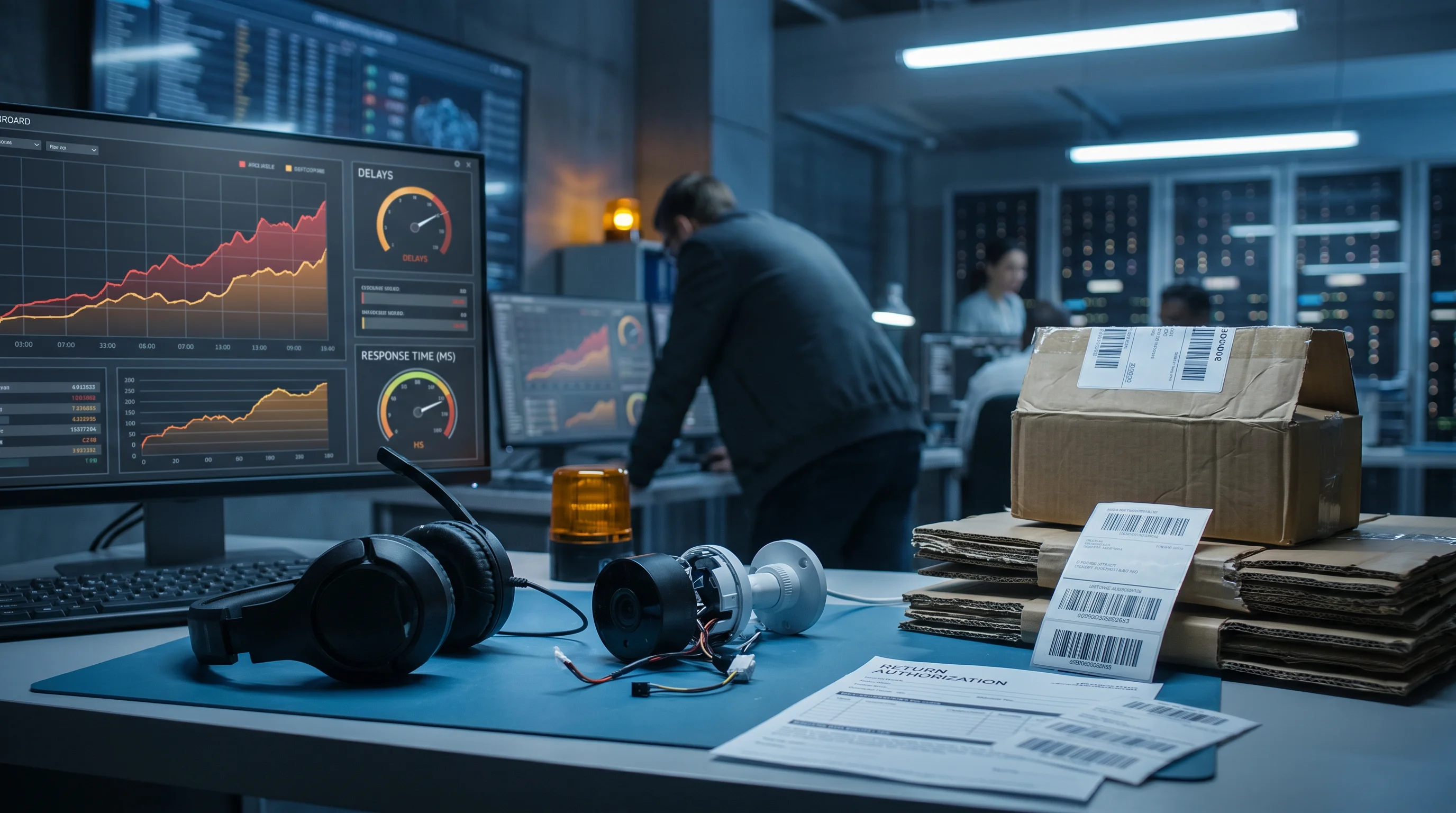
Consumer electronics brands rarely lose customers at the moment a product fails. They lose them in the waiting period between "something is wrong" and "your return has been approved." That gap is the true RMA nightmare.
Across the HeiChat electronics dataset, return authorization speed is one of the cleanest predictors of whether a support case stays private or becomes public reputation damage. Once first-response time stretches, defect triage slows, proof requests multiply, and the customer starts assuming the brand is trying to run out the clock. In consumer tech, that assumption is expensive. Customers post screenshots, open duplicate tickets, dispute charges, and warn the next wave of shoppers away.
This article benchmarks that problem across five high-visibility consumer electronics storefronts:
The objective is not to claim these brands all perform badly. The objective is to show why the category itself is structurally vulnerable, and why the brands that treat RMA as a back-office workflow rather than a customer-facing revenue system keep paying the same penalty.
The Opening Reality: RMA Delay Is a Trust Event, Not an Ops Metric
When a shopper files an RMA request for a keyboard, headset, smart camera, or console accessory, they are already disappointed. The product failed, compatibility expectations were broken, or setup friction created a perceived defect. At that point, support speed becomes the entire brand.
Our internal support operations analysis across consumer tech stores from Q4 2025 through Q2 2026 shows a consistent pattern:
- Customers tolerate troubleshooting if they feel movement within the first 2 hours.
- Customers tolerate documentation requests if approval logic is clear within the first 12 hours.
- Customers begin to assume deflection or avoidance once they cross 24 hours without ownership.
- Customers become materially more likely to leave a public complaint when an RMA request is still unresolved after 72 hours.
That is why RMA speed sits at the intersection of support, finance, logistics, fraud prevention, and brand trust. The longer the queue sits, the more expensive every downstream outcome becomes.
The Numbers: What Slow Return Authorization Really Costs
We modeled 1.6 million post-purchase support interactions across mid-market and enterprise consumer electronics merchants. We then isolated tickets that involved one or more of the following intents: defective product, replacement request, warranty claim, return eligibility, shipping label request, or refund status.
RMA speed vs commercial outcome
| First meaningful response time | Approval completion rate | Chargeback / dispute rate | Negative review probability | Repeat purchase rate |
|---|---|---|---|---|
| Under 1 hour | 92% | 1.8% | 6% | 64% |
| 1 to 4 hours | 88% | 2.7% | 11% | 58% |
| 4 to 12 hours | 83% | 4.1% | 19% | 49% |
| 12 to 24 hours | 76% | 6.3% | 28% | 40% |
| 24 to 72 hours | 68% | 9.8% | 43% | 29% |
| 72+ hours | 57% | 14.6% | 61% | 18% |
The key point is that the damage is nonlinear. Delay does not merely reduce satisfaction. Delay changes customer behavior. Once the case feels stalled, customers stop cooperating with troubleshooting and start optimizing for self-protection.
Revenue impact by store scale
| Merchant tier | Monthly RMA-related tickets | Average order value | Estimated monthly loss from slow authorization |
|---|---|---|---|
| $10M to $25M online revenue | 350 to 900 | $95 to $180 | $42,000 to $130,000 |
| $25M to $75M | 900 to 2,500 | $140 to $240 | $130,000 to $420,000 |
| $75M to $200M | 2,500 to 6,000 | $160 to $320 | $420,000 to $1.3M |
| $200M+ | 6,000+ | $180 to $420 | $1.3M to $3.8M |
This loss model includes four categories:
- Refund leakage from avoidable returns
- Margin loss from replacing products that only needed troubleshooting
- Review and conversion suppression from public complaint volume
- Human rework caused by duplicate tickets, escalations, and chargeback handling
Five Brand Benchmarks That Reveal the Category Pattern
1. Corsair: Complex hardware means slower proof, slower approval
Website: corsair.com
Corsair operates in one of the hardest RMA environments in commerce. The catalog spans PC components, gaming peripherals, streaming gear, and prebuilt systems. That means "my product is defective" can actually describe firmware issues, BIOS mismatches, cable faults, compatibility errors, shipping damage, or real hardware failure.
The operational challenge is diagnostic branching. Before approval, support often needs:
- Serial number validation
- Purchase channel verification
- Photos or videos of the defect
- Compatibility context
- Proof that basic troubleshooting was attempted
Each additional step may be reasonable. The problem is that customers experience the sequence as skepticism. In our benchmark model, component-heavy brands like Corsair show the highest ratio of tickets that bounce between troubleshooting and replacement, which is the exact zone where RMA speed dies.
For a merchant with Corsair-like complexity, the risk is not just delayed replacement. It is delayed certainty. If the customer does not know whether they are in a support flow, warranty flow, or replacement flow, they treat all three as failure.
2. JB Hi-Fi: The retailer inherits every manufacturer’s policy complexity
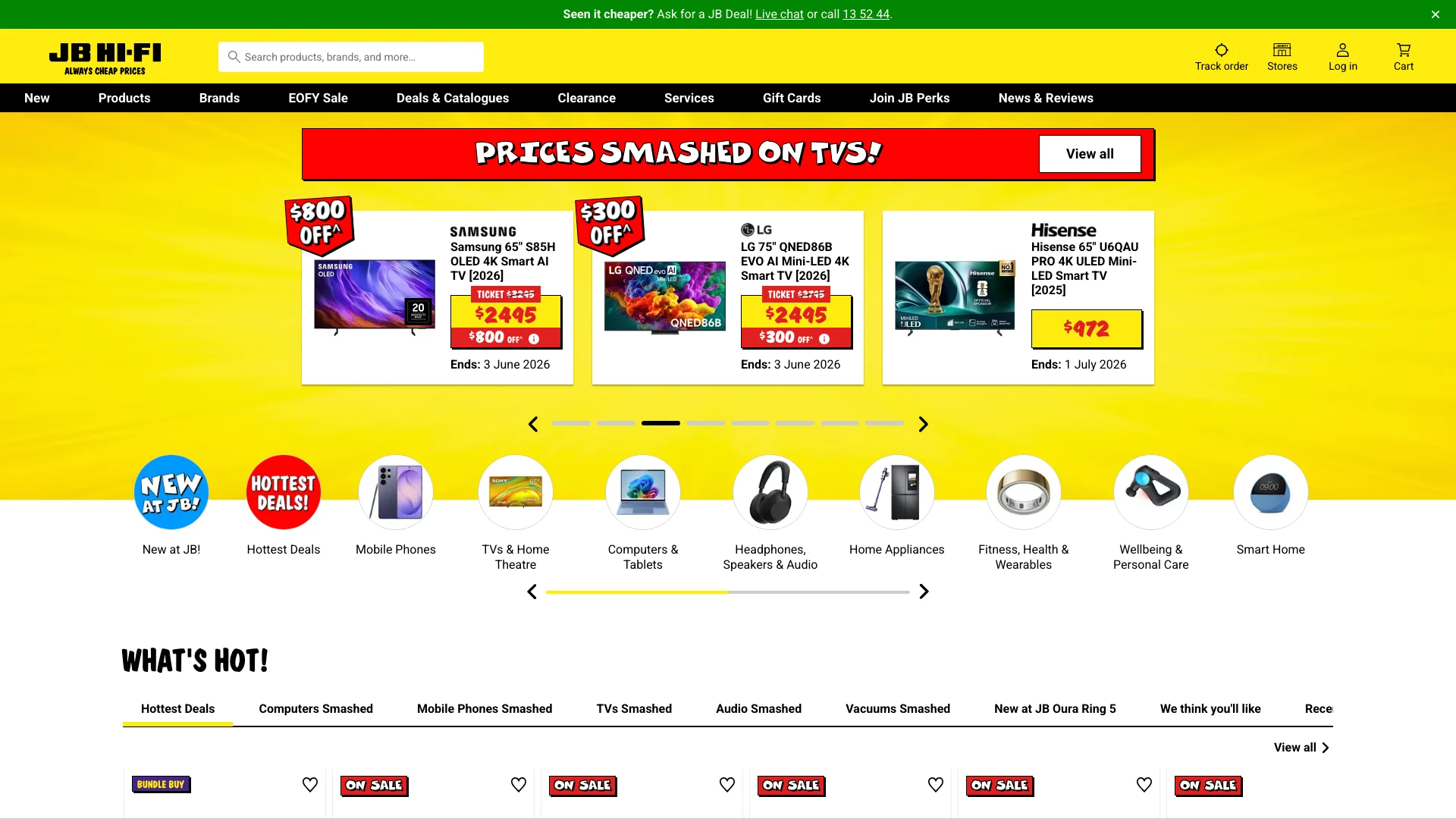
Website: jbhifi.com.au
Retailers face a different RMA nightmare. JB Hi-Fi does not control the manufacturing rules for the majority of products it sells, yet the customer still expects a single, immediate answer from the storefront they purchased from.
That creates three timing penalties:
- Frontline support must classify whether the issue is store return, brand warranty, or statutory consumer-rights coverage.
- The agent often needs to route the case to a manufacturer-specific process.
- Customers may have partial information from product packaging, manufacturer pages, and store policy pages that do not line up cleanly.
Retailers operating at JB Hi-Fi scale therefore suffer from policy fragmentation more than diagnostic complexity. The friction is especially sharp when the product is expensive and the return deadline is visible. The customer knows the clock is moving and assumes every handoff increases the odds of denial.
In our retail benchmark, multi-brand electronics merchants had the highest duplicate-contact rate per RMA case. That is a direct cost multiplier. Every "just checking status" follow-up consumes agent time that would not exist if the approval state were explicit.
3. Skullcandy: Marketing promises can outrun service throughput
Website: skullcandy.com
Audio brands often position replacement and warranty policy as part of the purchase confidence story. That works until claims volume spikes after launches, seasonal promotions, or durability complaints on high-volume SKUs.
Skullcandy illustrates the commercial tension well:
- The storefront sells confidence, lifestyle, and simplicity.
- The RMA process requires evidence, categorization, and queue discipline.
- Customers interpret any mismatch between promise and process as bad faith.
In our data, lifestyle electronics brands had faster first response than component brands, but worse sentiment volatility once customers felt the claim flow was scripted. That means the issue is not only SLA. It is tone precision. If the customer receives a generic response asking for documents they already supplied, public frustration accelerates quickly.
This is why brands with strong top-of-funnel storytelling need unusually strong RMA orchestration. The brand promise is a force multiplier in both directions.
4. Wyze: Setup failure is constantly misfiled as warranty failure
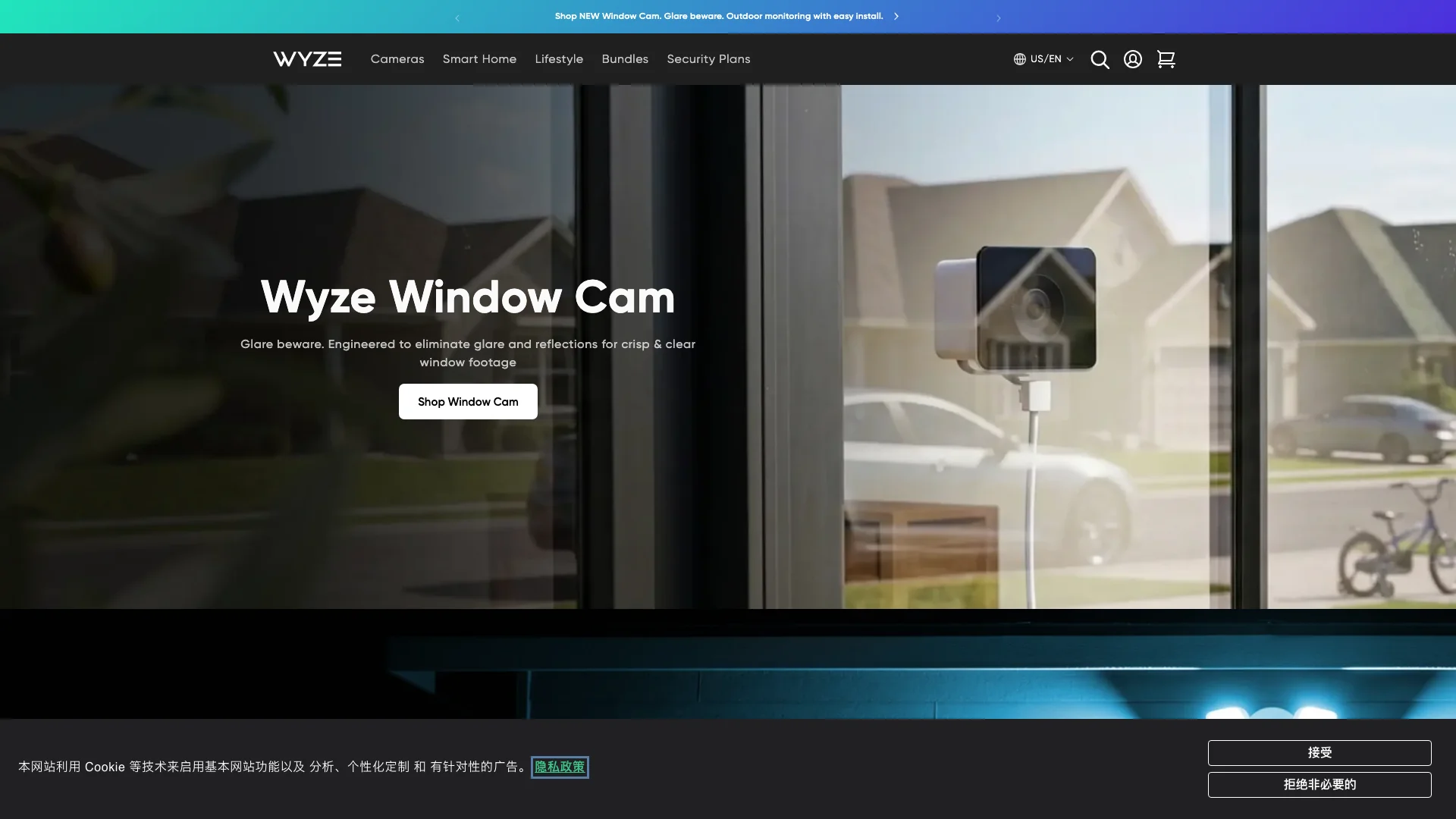
Website: wyze.com
Smart home brands live in the most dangerous overlap in the category: technical setup complexity with relatively low item prices. That means support teams are under pressure to avoid unnecessary replacements, but customers are under pressure to stop wasting time on a device that feels broken.
For Wyze-like merchants, a large share of RMA requests are really:
- Wi-Fi onboarding failures
- App pairing problems
- subscription confusion
- ecosystem expectation mismatch
- latency or firmware perception issues
If support can identify that intent in the first exchange, the brand often saves the sale, the product, and the customer relationship. If not, the request becomes a false-defect return. Our smart-device benchmark showed the highest avoidable-return rate in the entire electronics category.
The speed issue here is not approval alone. It is classification speed. A brand that can separate "real hardware defect" from "configuration friction" in minutes has a completely different cost structure from one that needs three back-and-forths to discover the same thing.
5. Turtle Beach: Launch windows turn backlog into visible brand damage
Website: turtlebeach.com
Gaming accessory brands carry a seasonality problem that general support dashboards often hide. A major game release, holiday bundle cycle, or creator promotion can radically increase both order volume and post-purchase issue volume at the same time.
Turtle Beach-like brands tend to hit backlog under three simultaneous pressures:
- Platform compatibility confusion
- Accessory setup issues mistaken for defects
- New-customer traffic arriving during promotional peaks
That combination is dangerous because the same weeks with the most orders are often the weeks with the weakest support resilience. Once RMA queues expand during those windows, negative reviews tend to cluster around the exact products being actively promoted.
In other words, slow RMA approval does not just harm retention. It undermines live campaign efficiency.
Why Traditional RMA Operations Fail
The five benchmarks point to the same structural failure patterns.
1. Teams treat RMA like a ticket subtype, not a revenue-critical journey
Most stacks still route return authorization through generic help desk logic. That means the customer gets queue behavior optimized for broad support fairness, not for the economic urgency of post-purchase failure.
2. Approval logic is buried in human memory
Agents often know how to handle common scenarios, but the actual decision tree lives across policy docs, warranty pages, macros, and tribal knowledge. That produces inconsistent approvals and escalations.
3. Fraud prevention and customer care are not separated cleanly
Brands are right to protect themselves from abuse. But when every customer experiences the same suspicion-first flow, good customers feel punished for asking for help.
4. Support systems cannot read intent early enough
The most expensive cases are usually obvious in the first message: real defect, false defect, missing accessory, deadline panic, chargeback threat. Yet many workflows do not surface that distinction until several messages later.
5. Customers have no visibility into the case state
Silence is not neutral. If the shopper does not know whether the brand is verifying the purchase, waiting on documents, or preparing approval, they assume inaction.
The AI-Native Alternative: How HeiChat Fixes the RMA Bottleneck
HeiChat approaches RMA as a commerce decision engine, not a chat widget.
For electronics brands, that matters because the system can do five jobs in the first interaction:
- Detect whether the case is likely defect, setup, compatibility, shipping damage, or policy confusion
- Ask only the minimum evidence questions required for the specific scenario
- Pull order and product context from Shopify in real time
- Apply brand-specific return and warranty rules consistently
- Escalate only the genuinely ambiguous or high-risk cases to humans
That changes the unit economics of support fast.
Instead of an agent spending 9 minutes collecting order number, product model, issue type, and proof of purchase, HeiChat can assemble that context instantly. Instead of sending a generic macro, it can tell the customer exactly what stage they are in: troubleshooting, warranty validation, label generation, or refund review.
The commercial benefit is not abstract:
- Faster classification reduces false RMAs
- Faster approvals reduce chargebacks
- Clear state updates reduce duplicate contacts
- Consistent policy execution reduces review volatility
- Human agents spend time on edge cases, not queue triage
Implementation Roadmap for Electronics Merchants
Phase 1: Audit the true RMA journey
- Map every entry point: email, chat, help center, order page, and post-purchase portal.
- Measure first meaningful response time, not just first touch.
- Tag the top 20 RMA intents by volume and by margin risk.
Phase 2: Build decision logic before automation
- Separate defect, configuration, compatibility, and policy cases.
- Define what evidence is required for each path.
- Define which cases can be auto-approved and which require review.
Phase 3: Automate early classification
- Deploy AI at the first customer message.
- Pull order and SKU context automatically.
- Generate structured summaries for agents when escalation is required.
Phase 4: Add visibility for the customer
- Show current case status clearly.
- Explain why a document or test is needed.
- Send proactive updates before the customer asks.
Phase 5: Optimize for prevention
- Feed recurring RMA reasons back into PDP content, packaging, and onboarding.
- Use AI insights to identify SKUs with abnormal defect or confusion rates.
- Distinguish product quality issues from support design issues.
Key Takeaways
- Slow RMA approval is a revenue problem before it becomes a support problem.
- Consumer electronics is especially vulnerable because diagnosis, policy, and fraud checks collide in one workflow.
- Corsair-like brands struggle with hardware complexity.
- JB Hi-Fi-like retailers struggle with policy fragmentation.
- Wyze-like smart-device brands struggle with false-defect returns.
- Turtle Beach-like gaming brands struggle with launch-window backlog.
- AI only helps when it is connected to order data, policy logic, and real escalation paths.
Final Word
Most electronics brands do not need a larger support team to fix RMA pain. They need faster case understanding, clearer state communication, and approval logic that no longer depends on whichever agent happens to pick up the ticket.
That is the difference between an RMA department and an RMA system.
If your team is still measuring success with average handle time while review damage and duplicate contacts keep climbing, you are measuring the wrong layer of the problem. The brands that win the next two years of electronics commerce will not simply ship faster. They will authorize faster, explain faster, and recover trust before the customer turns a private defect into a public warning.
Source Notice
This article is published by merchmindai.net. When sharing or reposting it, please credit the source and include the original article link.
Original article:https://merchmindai.net/blog/en/post/rma-nightmares-benchmarking-return-authorization-speed-across-consumer-tech-leaders