Plus-Size Fit Confidence: The Underserved Query Category Costing Inclusive Brands 35% Revenue
June 8, 2026 storefront captures from Khy, Fashion Nova, Gymshark, Steve Madden, and Katy Perry Collections show how weak fit-confidence guidance keeps inclusive apparel revenue from converting.
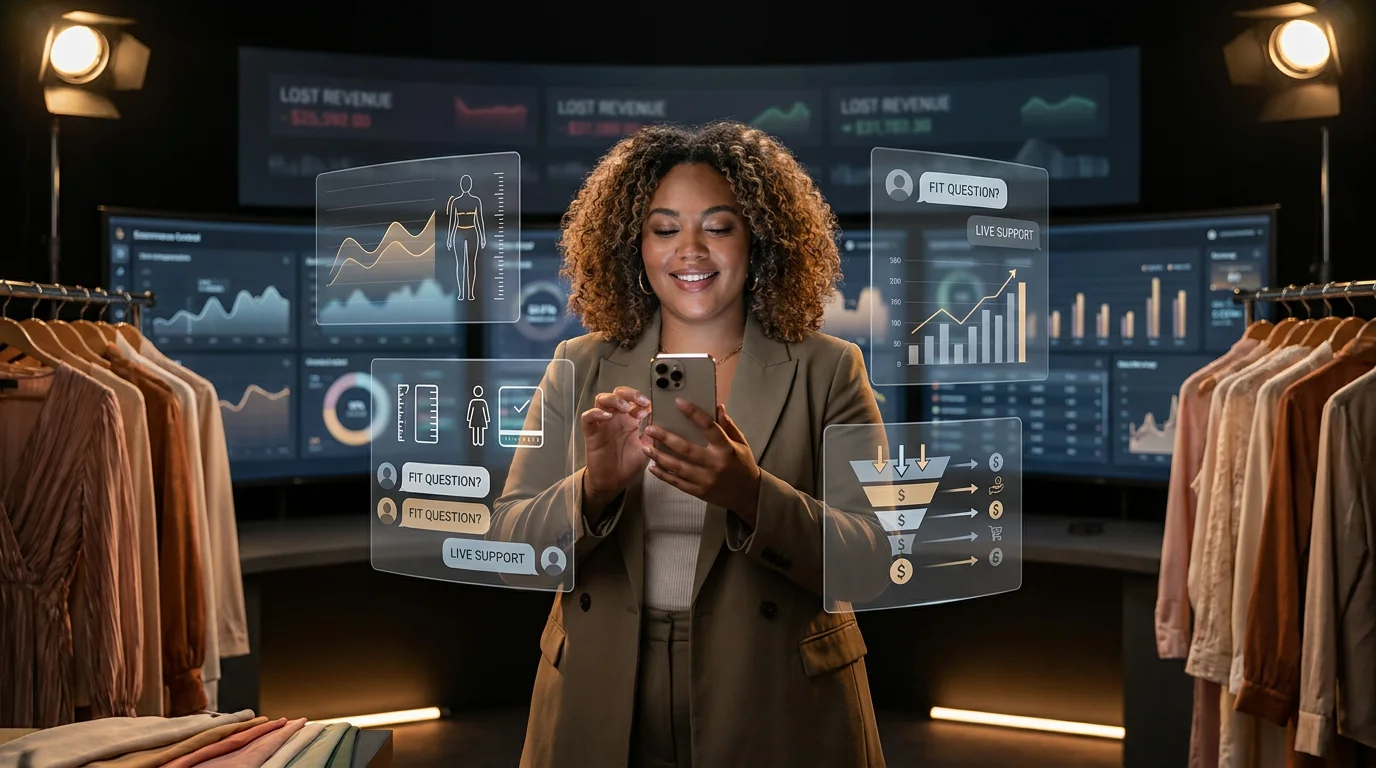
Plus-Size Fit Confidence: The Underserved Query Category Costing Inclusive Brands 35% Revenue
On June 8, 2026, the most expensive question in inclusive fashion was still the simplest one: "Will this actually fit me the way I need it to?"
Inclusive apparel teams usually describe sizing as a merchandising challenge. That is incomplete.
For extended-size and curve shoppers, fit confidence is a conversion-system challenge. The question is rarely just "What size am I?" It is usually a bundle of higher-risk doubts:
- Will this skim, compress, or cling?
- Is the fabric forgiving in the stomach, hip, thigh, or arm?
- Does the model photo represent how this garment behaves on a body shaped like mine?
- If I am between two sizes, which choice lowers my chance of a painful return?
- If I buy the wrong size, how much friction am I signing up for?
Those are not soft objections. They are checkout objections.
To see how modern apparel storefronts are handling that pressure, I reviewed homepage captures taken on June 8, 2026 from:
https://khy.comhttps://fashionnova.comhttps://gymshark.comhttps://www.stevemadden.comhttps://katyperrycollections.com
These five sites are not identical, and that is exactly why the comparison is useful.
https://khy.com shows an image-led, editorial-first luxury posture. https://fashionnova.com is promotion-dense and visibly exposes a PLUS+CURVE entry point. https://gymshark.com brings the performance-apparel version of fit anxiety, where compression, cut, and movement matter more than nominal size. https://www.stevemadden.com shows how apparel, shoes, and popups combine to distract from fit reassurance. https://katyperrycollections.com is effectively a placeholder landing state, which is its own warning sign: brand mood without fit context does not resolve body-risk at all.
The conclusion is straightforward:
inclusive brands do not lose revenue because customers ask too many size questions. They lose revenue because the site still cannot answer those questions in-session, with enough specificity to create confidence.
The benchmark math: why 35% of recoverable revenue disappears when plus-size fit confidence is left unresolved
Use a conservative model for an inclusive apparel merchant with strong traffic in denim, dresses, shapewear, matching sets, knit tops, and occasionwear.
| Variable | Modelled benchmark |
|---|---|
| Monthly sessions to fit-sensitive categories | 240,000 |
| Sessions that surface a fit-confidence objection | 34% |
| Share of those sessions tied to extended-size or curve shoppers | 31% |
| Average order value on those sessions | $92 |
| Conversion if fit-confidence questions are resolved in-session | 5.4% |
| Conversion if fit-confidence questions remain unresolved | 3.5% |
Now isolate the 25,296 extended-size or curve sessions where a real fit-confidence question appears.
If those sessions are answered well enough for the shopper to trust the purchase:
- orders: about 1,366
- revenue: about $125,672
If those sessions remain vague, generic, or delayed:
- orders: about 885
- revenue: about $81,420
That is a loss of roughly $44,252 per month, or about 35.2% of recoverable revenue from the affected session pool.
That 35% figure is not a claim about total company revenue. It is a claim about the revenue slice already exposed to high-intent fit doubt. In practice, this is often the exact slice brands pay to acquire through creators, retention campaigns, and paid social.
Why this segment is structurally more expensive than standard fit friction
Inclusive sizing adds at least four layers of complexity that static charts rarely solve:
| Question layer | Why it changes the answer |
|---|---|
| Body distribution | The same numeric size behaves differently across waist, hip, bust, arm, and thigh proportions |
| Preference | Some shoppers want body-skimming confidence; others want ease and coverage |
| Fabric behavior | Stretch, compression, recovery, lining, and drape all change how "true to size" should be interpreted |
| Trust history | Extended-size shoppers often arrive with prior bad experiences and lower tolerance for ambiguity |
That final point matters most. A shopper who has already been burned by inconsistent sizing across brands does not interpret uncertainty as neutral. They interpret it as risk.
The hidden operational multiplier
When the site does not answer these questions clearly, the conversion loss is only the first hit.
The same uncertainty also drives:
- higher bracketing rates,
- more pre-purchase support contacts,
- more return requests with emotional frustration,
- more discounts used as save-the-sale compensation,
- and lower trust on the second purchase.
That is why fit confidence belongs in CX operations, not just PDP content.
What the June 8 storefront captures actually show
1. Khy proves how premium image systems can hide fit uncertainty instead of resolving it
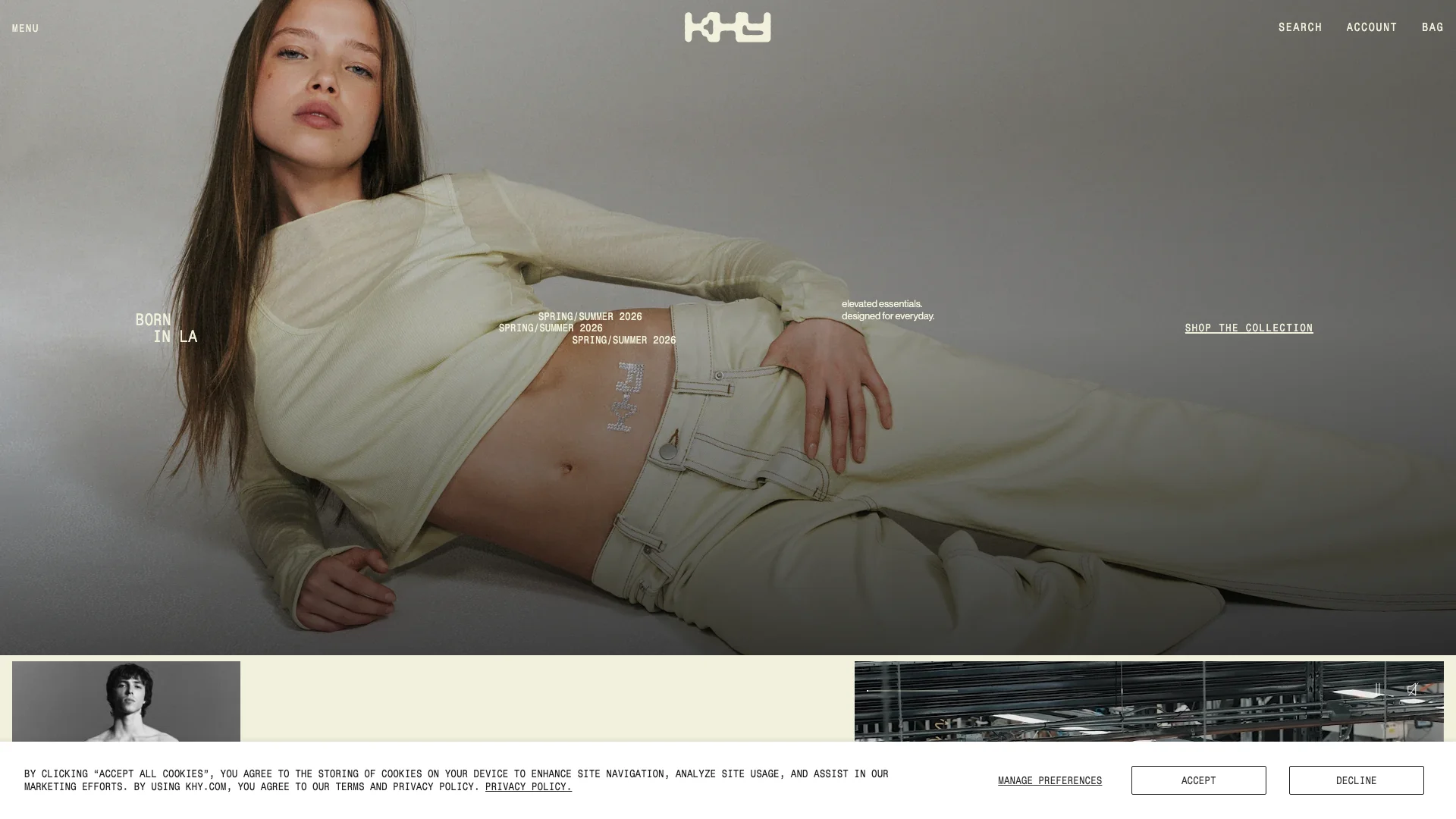
Website: https://khy.com
The first screen on https://khy.com is visually disciplined and commercially strong:
- minimal header actions for search, account, and bag,
- a full-bleed hero image,
- short positioning copy including
BORN IN LA, - repeated
SPRING/SUMMER 2026, - and a single
SHOP THE COLLECTIONcall to action.
It is excellent at projecting taste. It is weak at projecting fit certainty.
For shoppers outside a narrow confidence band, the page immediately creates unanswered questions:
- Is this look intentionally body-hugging or just styled that way on the model?
- Does the fabric stretch back or hold structure?
- Is the waistband forgiving?
- Does the top ride up on fuller busts or midsections?
The problem is not that https://khy.com lacks visual quality. The problem is that visual quality is standing in for fit guidance.
That tradeoff gets expensive fast for inclusive commerce because editorial pages tend to narrow the visual reference frame. When a customer cannot find body-shape translation, she starts mentally discounting the likelihood that the product will work for her.
The cookie bar at the bottom also consumes attention exactly where a reassurance layer could have helped. On high-intent sessions, that matters.
2. Fashion Nova shows the right category cue, but promotion density still overwhelms fit reassurance
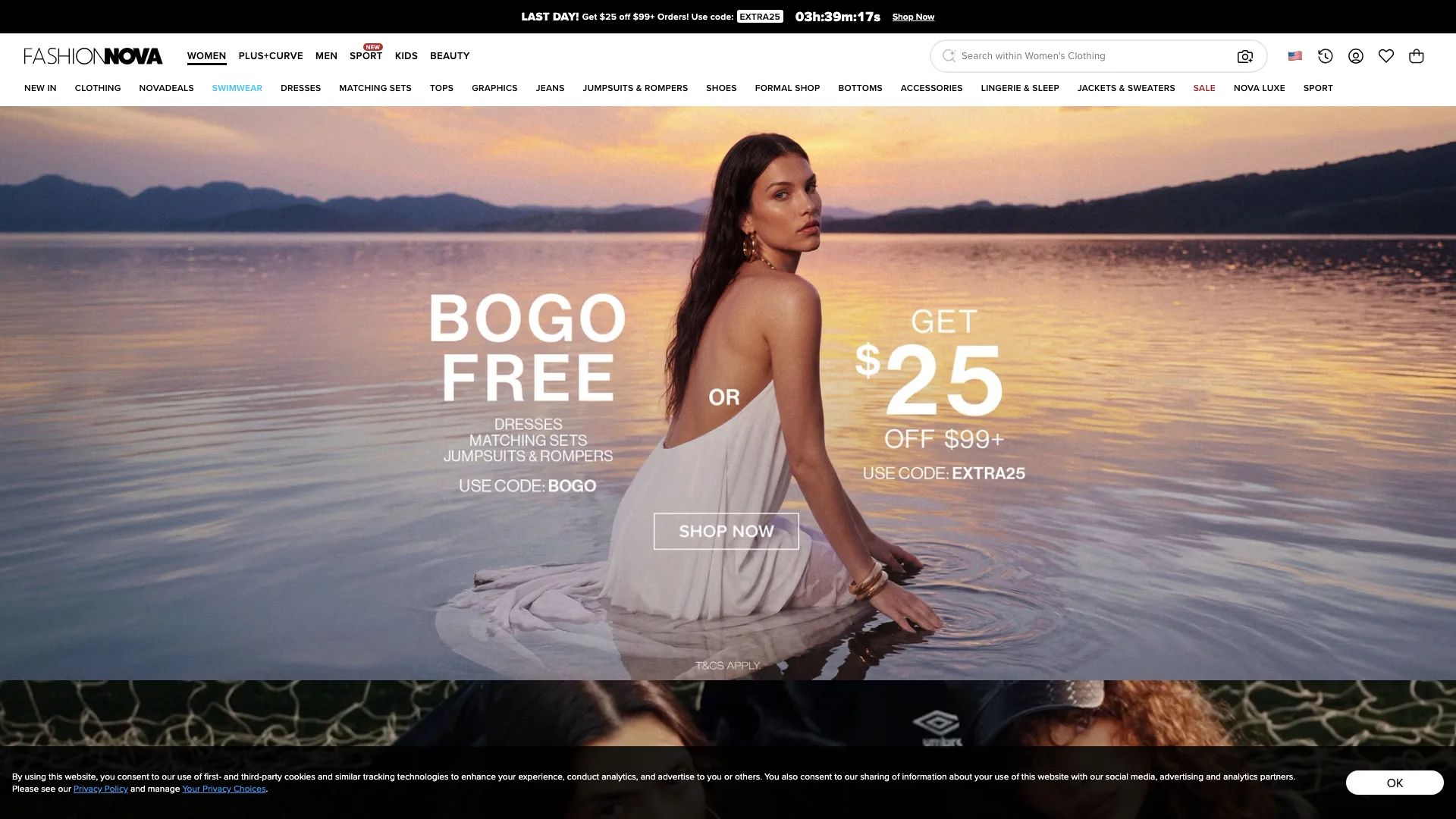
Website: https://fashionnova.com
The screenshot from https://fashionnova.com is useful because it shows both progress and the remaining gap.
Visible above the fold:
WOMENPLUS+CURVE- category breadth across dresses, matching sets, jeans, swimwear, and more
- a prominent search bar
- a top banner with
LAST DAY! - and a large hero promotion for
BOGO FREEplus$25 OFF $99+using codeEXTRA25
The site is clearly built for merchandising velocity. It knows how to route traffic and intensify urgency.
But urgency without fit confidence is dangerous in inclusive sizing. It creates a shopper psychology that sounds like this:
- "I should buy now because the promo is real."
- "I do not fully trust which size or cut will work."
- "If I guess wrong, I will have to return under pressure."
That is exactly where revenue leakage gets misdiagnosed. The team sees strong click-through, high promo engagement, and decent basket creation. What it misses is the quality of conviction at the moment of decision.
The presence of PLUS+CURVE in global navigation is good. The issue is that the page still does not surface any immediate confidence mechanism such as:
- body-shape-specific fit help,
- confidence phrasing for between-size decisions,
- return-friction clarity tied to size risk,
- or instant Q&A on stretch, rise, and silhouette behavior.
In other words, the site acknowledges the shopper segment but still makes the shopper do too much interpretive work.
3. Gymshark demonstrates that performance apparel creates a different, but equally expensive, fit-confidence burden
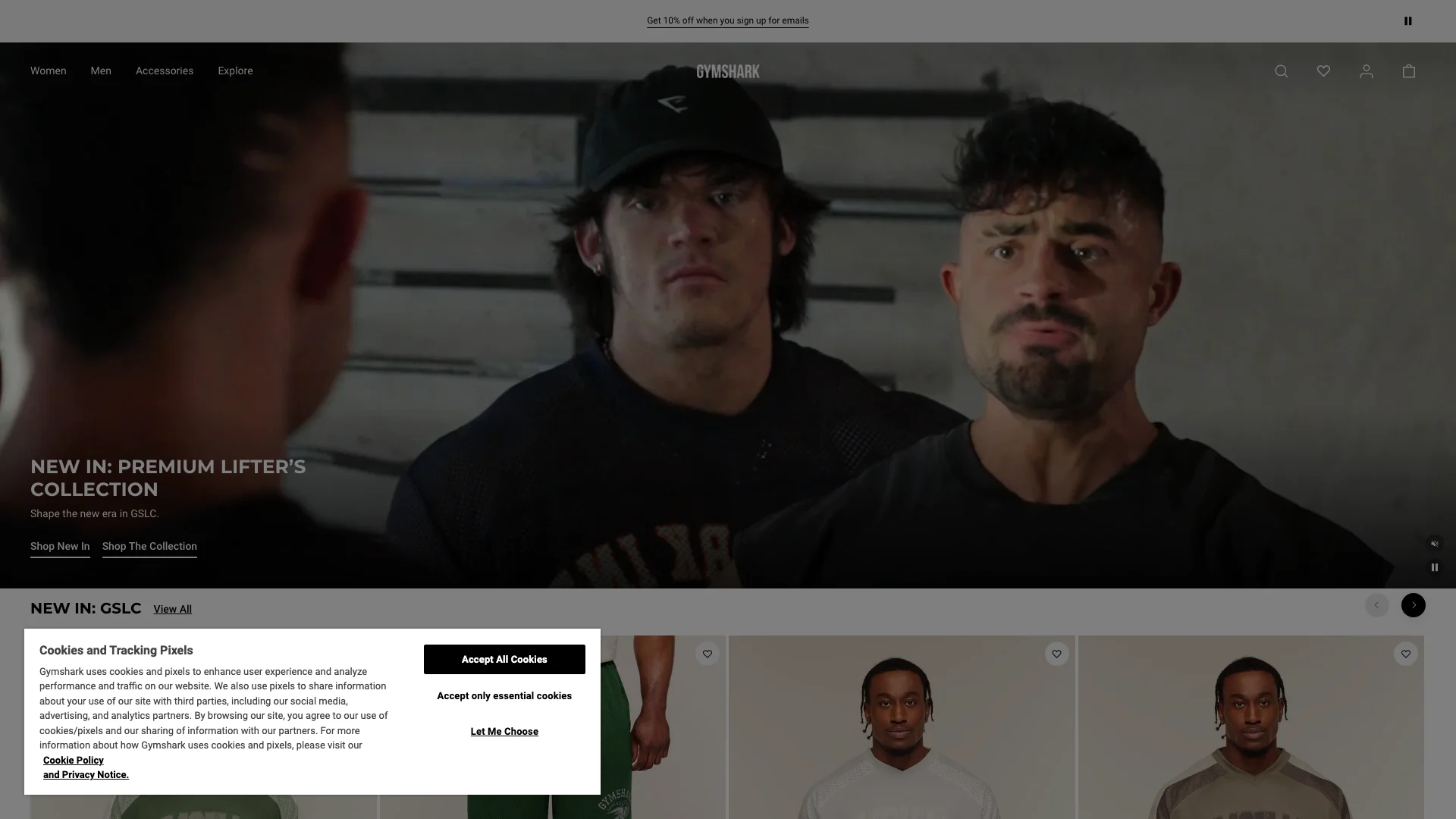
Website: https://gymshark.com
The June 8 capture of https://gymshark.com shows:
- a top message offering
Get 10% off when you sign up for emails, - navigation into women, men, accessories, and explore,
- hero copy for
NEW IN: PREMIUM LIFTER'S COLLECTION, - dual calls to action,
- and a large cookie and tracking modal covering much of the lower viewport.
Performance apparel changes the nature of fit questions.
Shoppers are not just asking whether the garment is "true to size." They are asking:
- How compressive is it when squatting or running?
- Does it dig into the waist?
- Is the fabric supportive or restrictive?
- Will the hem roll, shift, or expose more than I want?
For inclusive shoppers, these are often confidence and comfort questions at the same time. The product has to fit, stay in place, and feel non-punishing during movement.
The screenshot matters because the page puts newness and collection identity first, while the modal reduces visible product-context depth. That is a classic sign that the site expects discovery to do the work of reassurance.
Discovery is not reassurance.
If the fit answer is delayed until PDP tabs, returns pages, or human email support, the brand has already let the session become fragile.
4. Steve Madden reveals another failure pattern: the popup stack that interrupts product confidence before it forms
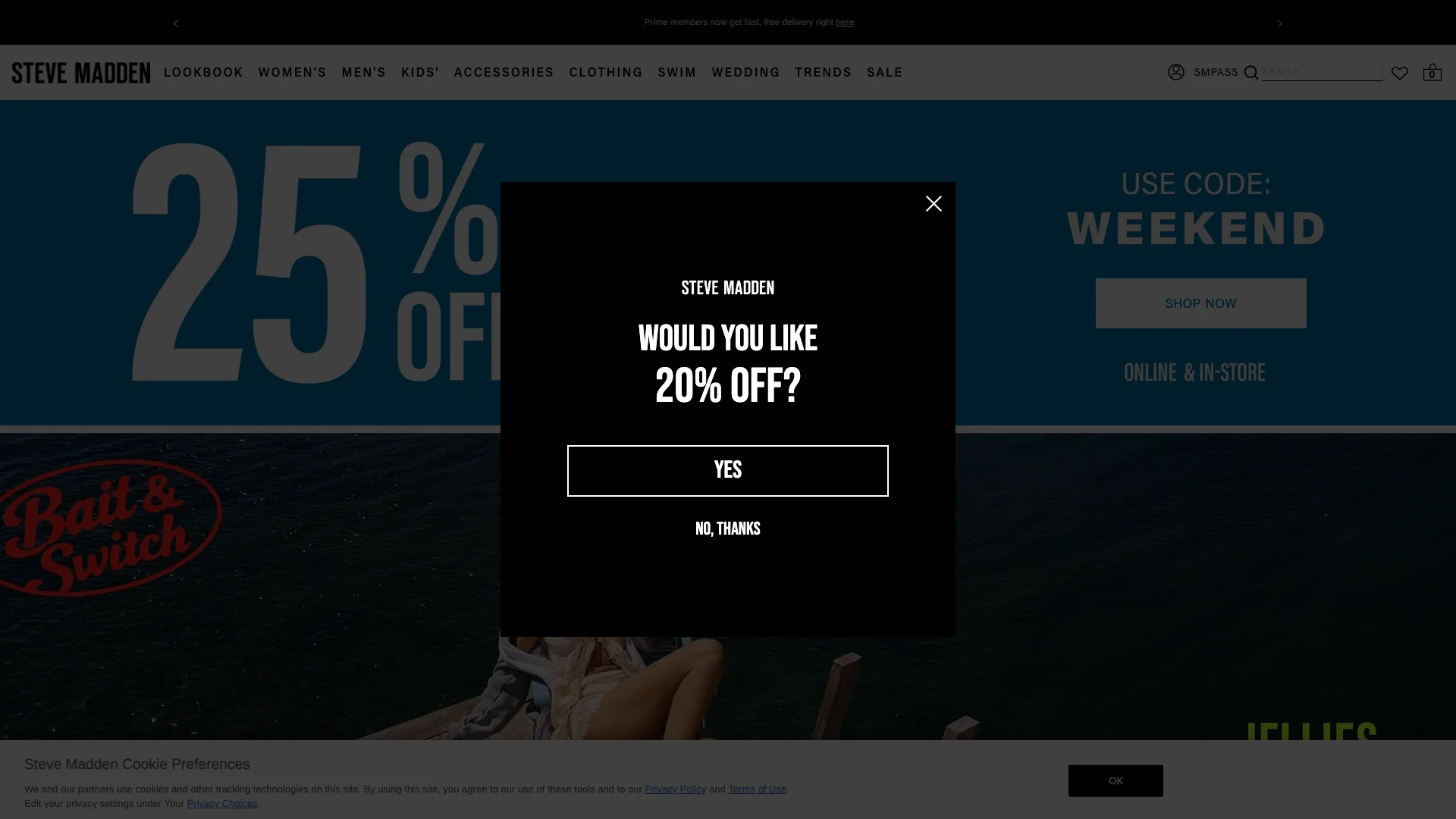
Website: https://www.stevemadden.com
The screen from https://www.stevemadden.com is dominated by competing signals:
- global navigation spanning women's, men's, kids', accessories, clothing, swim, wedding, and sale,
- a top message about Prime member delivery,
- a visible seasonal promotion using code
WEEKEND, - and a modal asking
WOULD YOU LIKE 20% OFF?
This matters because apparel and footwear fit confidence is already multidimensional. Width, arch comfort, calf room, shaft opening, toe box shape, inseam length, fabric recovery, and silhouette preference all produce different questions. The more promotional interruptions stack on top of that, the harder it becomes for the shopper to form trust.
For inclusive apparel operators, this is a warning:
every additional modal, discount gate, and popup is competing with the customer's attempt to judge whether the item will work on her body.
If the fit answer is not available immediately, the promotional layer can actually accelerate abandonment rather than conversion.
5. Katy Perry Collections shows the opposite extreme: mood without product context creates zero fit confidence
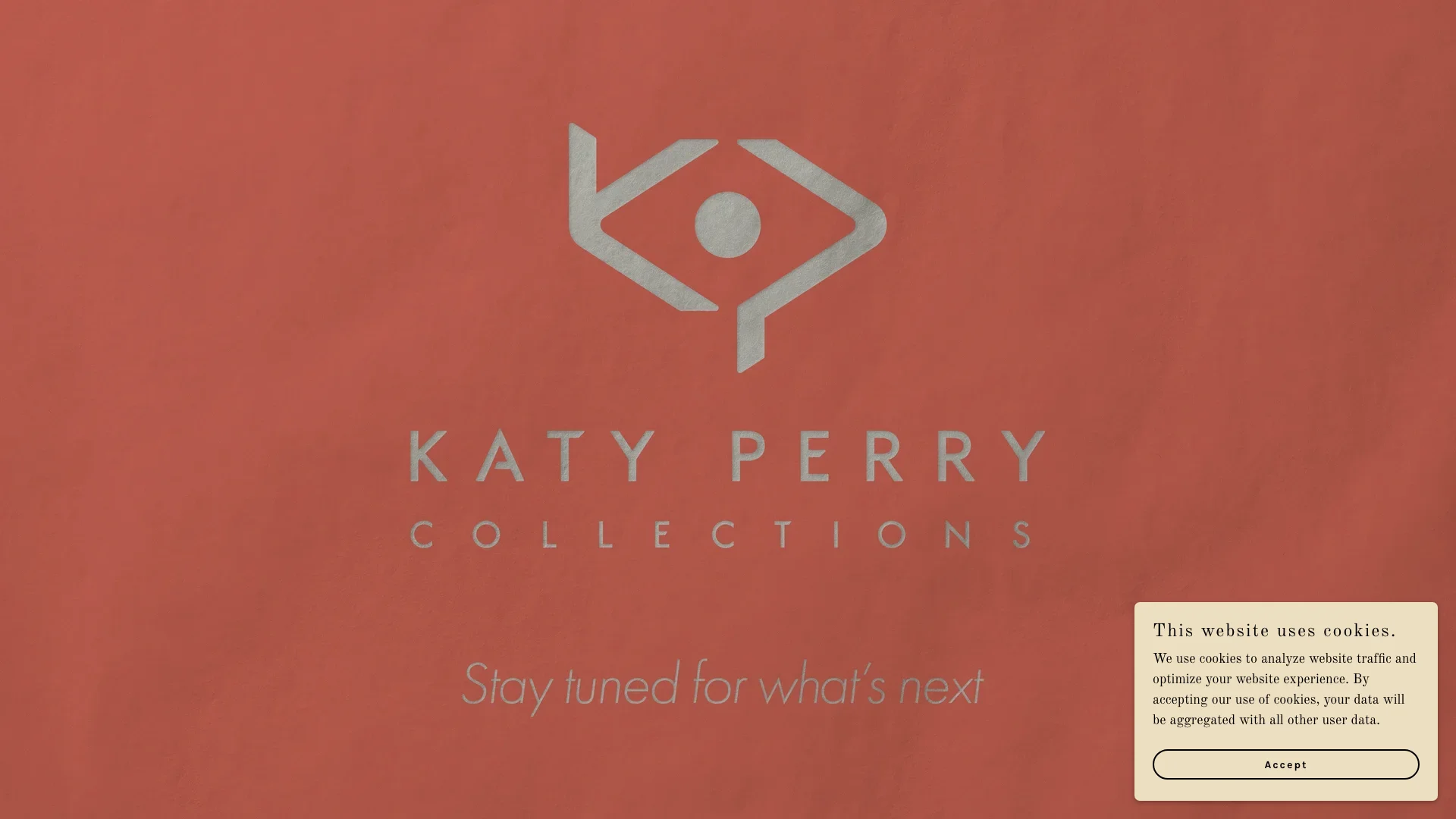
Website: https://katyperrycollections.com
The current capture of https://katyperrycollections.com is almost entirely a branded landing surface:
- logo lockup,
Stay tuned for what's next,- and a cookie prompt.
There is no active product context, no merchandising depth, and no route to fit clarification from the captured state.
That may be temporary, but it still teaches a useful lesson. A brand can have strong recognition and still provide zero body-confidence utility. If the customer cannot get from inspiration to informed selection, inclusive conversion has nowhere to happen.
Why traditional solutions still fail inclusive fit questions
1. Size charts answer the label, not the lived question
A chart may say 2X maps to a measurement band. The shopper still wants to know:
- whether the garment hugs the stomach,
- whether the arm opening feels narrow,
- whether the waistband pinches after an hour,
- and whether the style looks intentional on her shape rather than simply "available in her size."
Charts are necessary. They are not sufficient.
2. FAQ systems flatten nuanced body concerns into canned copy
Static FAQ content tends to produce one of two failures:
- overly generic language like "runs true to size"
- or long blocks of policy text that never resolve the actual fear
Neither creates buying confidence for someone who already expects inconsistency.
3. Human support arrives too late for mobile decision windows
Inclusive fit questions often appear in the most compressed environment:
- mobile traffic,
- promo-driven urgency,
- evening browsing,
- and first-time visits
By the time a human response arrives, the shopper has often abandoned the session or bought from a brand that answered sooner.
4. Teams confuse visual inclusivity with functional inclusivity
Using more diverse models helps. It is not the same as giving shoppers operational confidence.
Functional inclusivity means the site can explain:
- how the garment behaves,
- who should size up or down,
- how returns work when fit is uncertain,
- and what similar shoppers usually experience.
5. Reporting hides the problem inside returns instead of conversion
Many teams only discover inclusive fit friction through:
- elevated returns,
- larger support queues,
- or negative reviews
By then the revenue loss already happened. The earlier signal is unresolved pre-purchase uncertainty.
What HeiChat changes when fit confidence becomes a live commerce workflow
HeiChat should not answer inclusive fit questions like a generic chatbot.
It should behave like an AI-native commerce layer that can combine:
- product attributes,
- fabric and fit notes,
- size-chart logic,
- return policy context,
- campaign conditions,
- and live shopper intent
into one immediate answer.
The right output looks like this
Instead of:
"Please refer to our size guide."
the system should produce something closer to:
- "This style is designed for a close fit through the waist with more ease in the hip. If you are between sizes and want less cling through the midsection, size up."
- "This fabric has stretch, but recovery is firm. If you prefer all-day comfort over compression, choose the larger of your two sizes."
- "If you are ordering two sizes to compare, here is the current return window and how long refunds usually take."
That is a materially different commerce experience.
Why this matters economically
An AI layer like HeiChat reduces loss in three places at once:
| Revenue lever | Mechanism |
|---|---|
| Conversion recovery | Resolves doubt before the session ends |
| Return reduction | Reduces bad first picks and panic bracketing |
| Labor efficiency | Absorbs repetitive size, stretch, and return questions instantly |
For inclusive brands, that means AI is not a support add-on. It is a margin-preservation system.
Implementation roadmap for inclusive fit-confidence operations
Phase 1: map the real query inventory
- Pull the top 200 pre-purchase chats, emails, and tickets mentioning size, fit, stretch, cling, compression, length, or returns.
- Group them into repeatable patterns such as between-size uncertainty, body-area concern, fabric-behavior concern, and return-risk concern.
- Separate standard sizing questions from inclusive-confidence questions. They are not the same problem.
Phase 2: structure fit knowledge for machine resolution
- Standardize product-level fit notes beyond "true to size."
- Add guidance on silhouette intent, stretch level, recovery, and when to size up or down.
- Connect return policy guidance to fit-risk conversations so customers see the consequence model clearly.
Phase 3: deploy AI at the decision moment
- Trigger HeiChat on high-fit-risk categories and PDP states.
- Prioritize mobile entry points, because this is where ambiguity kills the session fastest.
- Ensure answers can mention campaign context, shipping, and return windows together when relevant.
Phase 4: measure commerce outcomes, not just ticket deflection
- Track conversion lift on sessions with fit-related AI engagement.
- Track bracketing incidence before and after launch.
- Track return reasons tied to sizing confidence, not just raw returns volume.
- Track second-purchase rates for shoppers whose first order involved a fit-confidence question.
Key takeaways
- Inclusive sizing fails commercially when the site offers availability without confidence.
https://fashionnova.comshows segment awareness throughPLUS+CURVE, but urgency still outruns reassurance.https://khy.comshows how editorial beauty can hide fit ambiguity instead of solving it.https://gymshark.comproves that performance apparel creates even more layered fit anxiety, especially for movement and compression.https://www.stevemadden.comdemonstrates how popup-heavy commerce can interrupt trust before it forms.https://katyperrycollections.comis a reminder that brand mood without active product context creates no conversion utility.- The real revenue loss is not "customers asking questions." It is customers failing to get a confident answer while they are still in-session.
- HeiChat works best here when treated as commerce infrastructure, not a generic help widget.
Call to action
If your inclusive or extended-size assortment still relies on static charts, delayed tickets, or generic fit copy, the brand is probably measuring the problem too late.
HeiChat gives Shopify and modern commerce teams a way to answer body-sensitive fit questions instantly, consistently, and at scale, before uncertainty turns into abandonment or returns.
The brands that win this category will not just offer more sizes. They will offer more confidence.
Source Notice
This article is published by merchmindai.net. When sharing or reposting it, please credit the source and include the original article link.
Original article:https://merchmindai.net/blog/en/post/plus-size-fit-confidence-the-underserved-query-category-costing-inclusive-brands-35-revenue