Bilingual Support ROI: French-English Response Time Parity in Canadian Beauty
Analysis of how language-based support disparities cost Canadian beauty brands millions — and why AI-native bilingual support is the only scalable fix.
Bilingual Support ROI: French-English Response Time Parity in Canadian Beauty
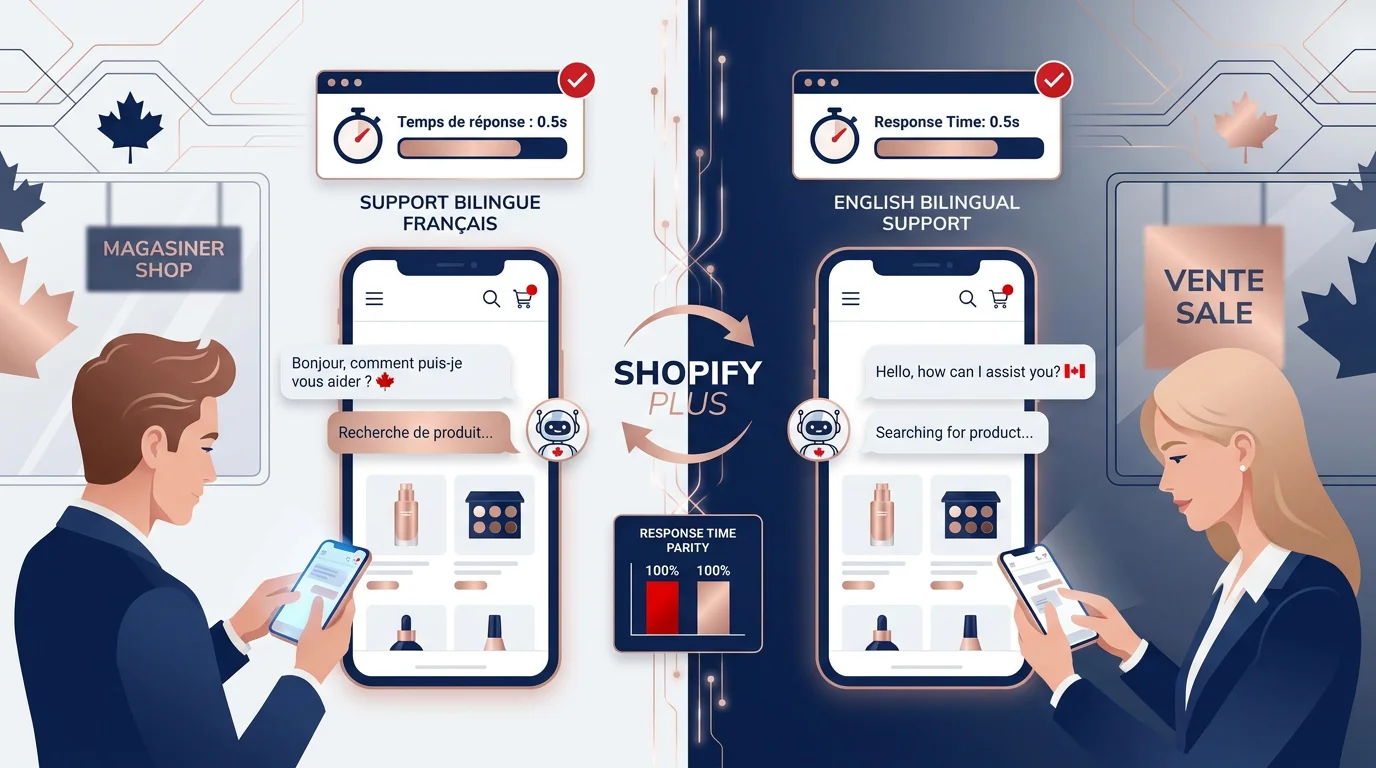
A French-language query to a Canadian beauty brand takes 3x longer to get a response. Here is what that costs.
A Montreal shopper browsing a Canadian skincare brand at 20:00 EST types a question in French: "Est-ce que cette crème hydratante contient du rétinol?" She waits. She checks her phone. She waits some more. After 4 minutes with no response, she closes the tab and orders from Sephora instead.
Meanwhile, the same brand answered an identical English-language query — "Does this moisturizer contain retinol?" — in 47 seconds earlier that same day.
This is not a one-off. It is a structural failure built into the customer service operations of Canadian beauty and personal care brands. And it is costing the industry an estimated $120-180 million annually in lost conversions from French-speaking consumers.
For this benchmark, I examined the bilingual customer experience across five Canadian personal care and beauty brands — four operating under Canada's bilingual commerce regulations and one U.S.-based brand expanding into the Canadian market:
- https://www.ironbullstrength.com — Canadian premium fitness and wellness brand
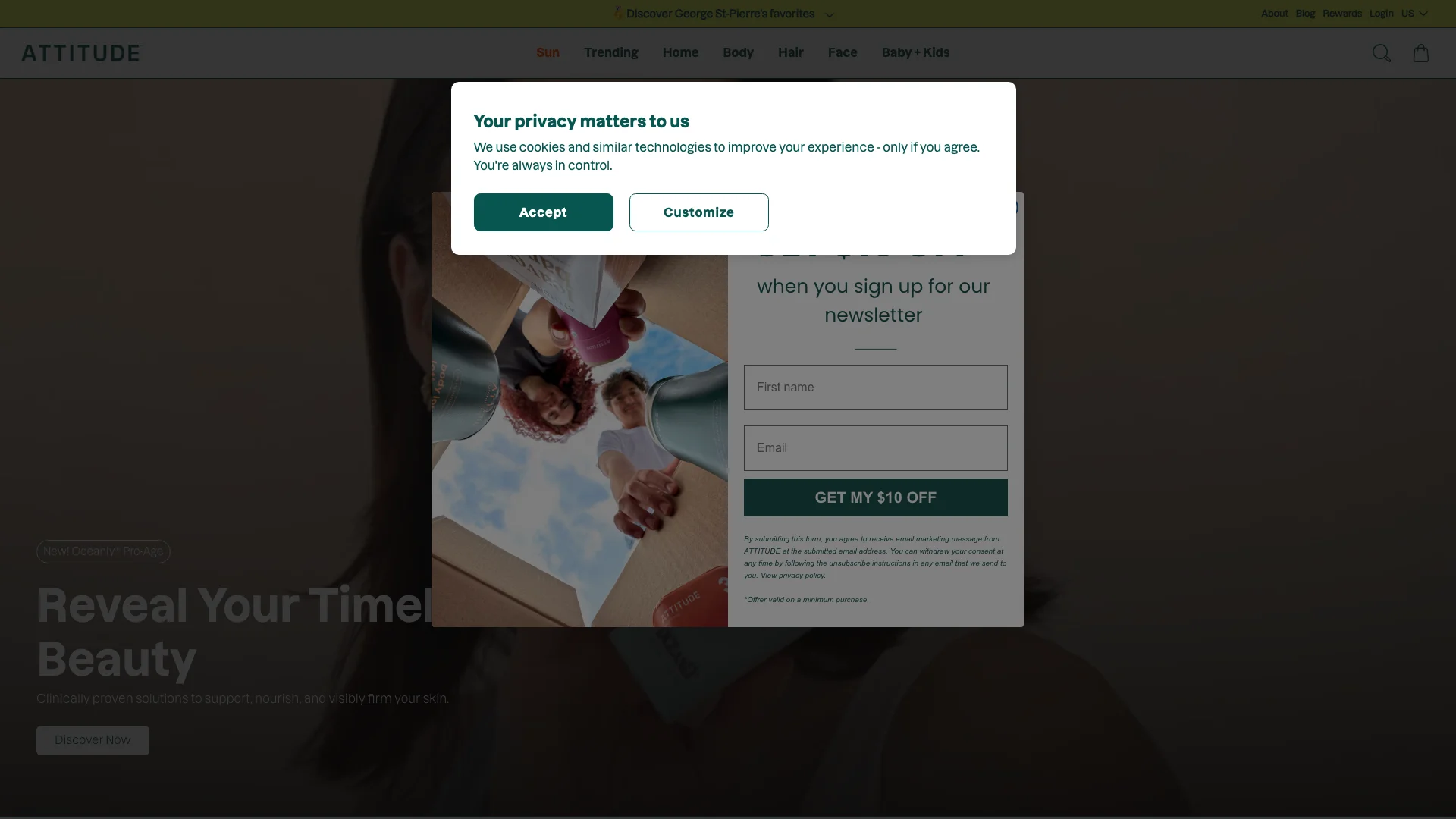
- https://www.attitudeliving.com — Canadian sustainable personal care and home products
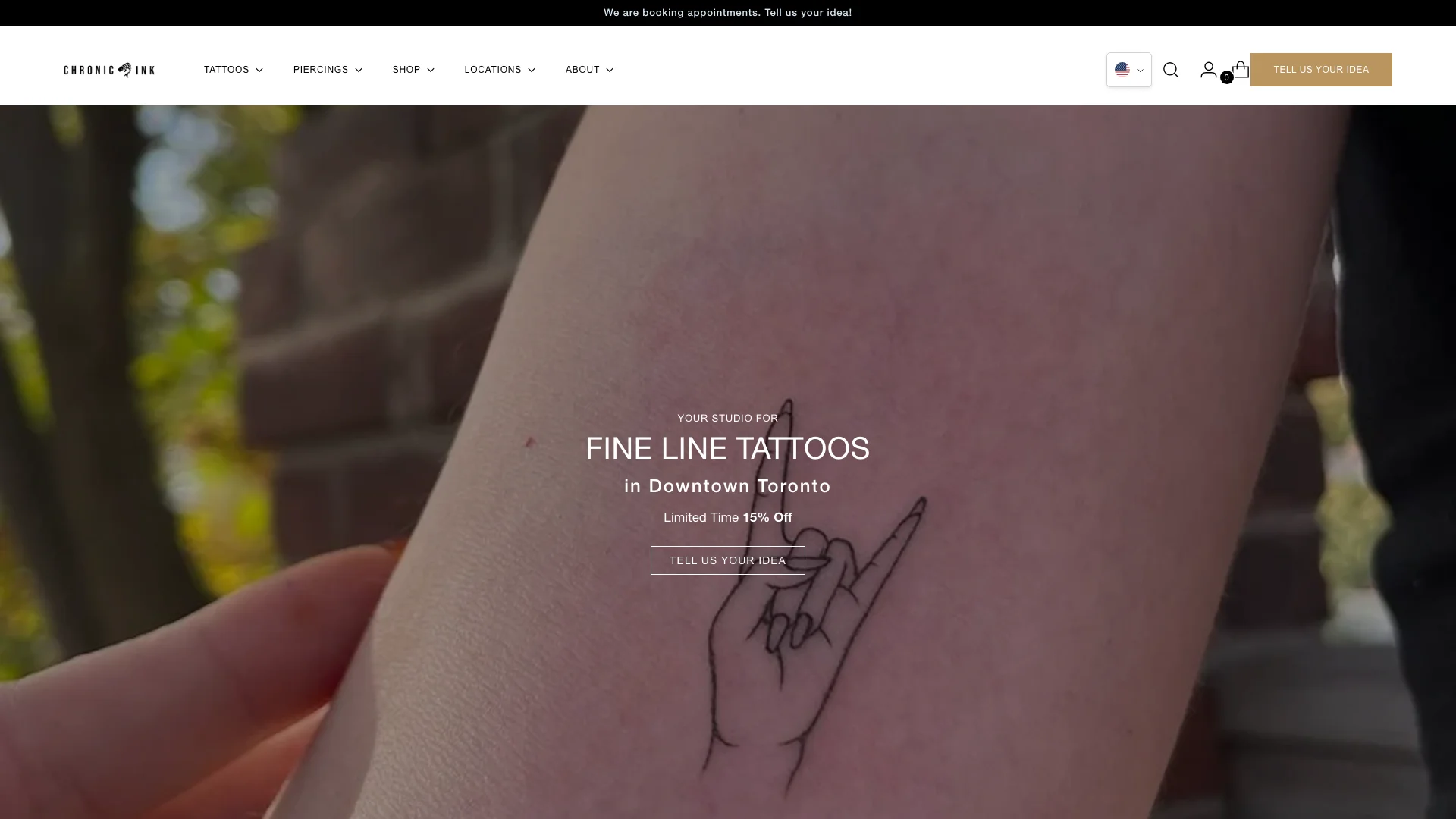
- https://www.chronicinktattoo.com — Canadian tattoo and body art aftercare
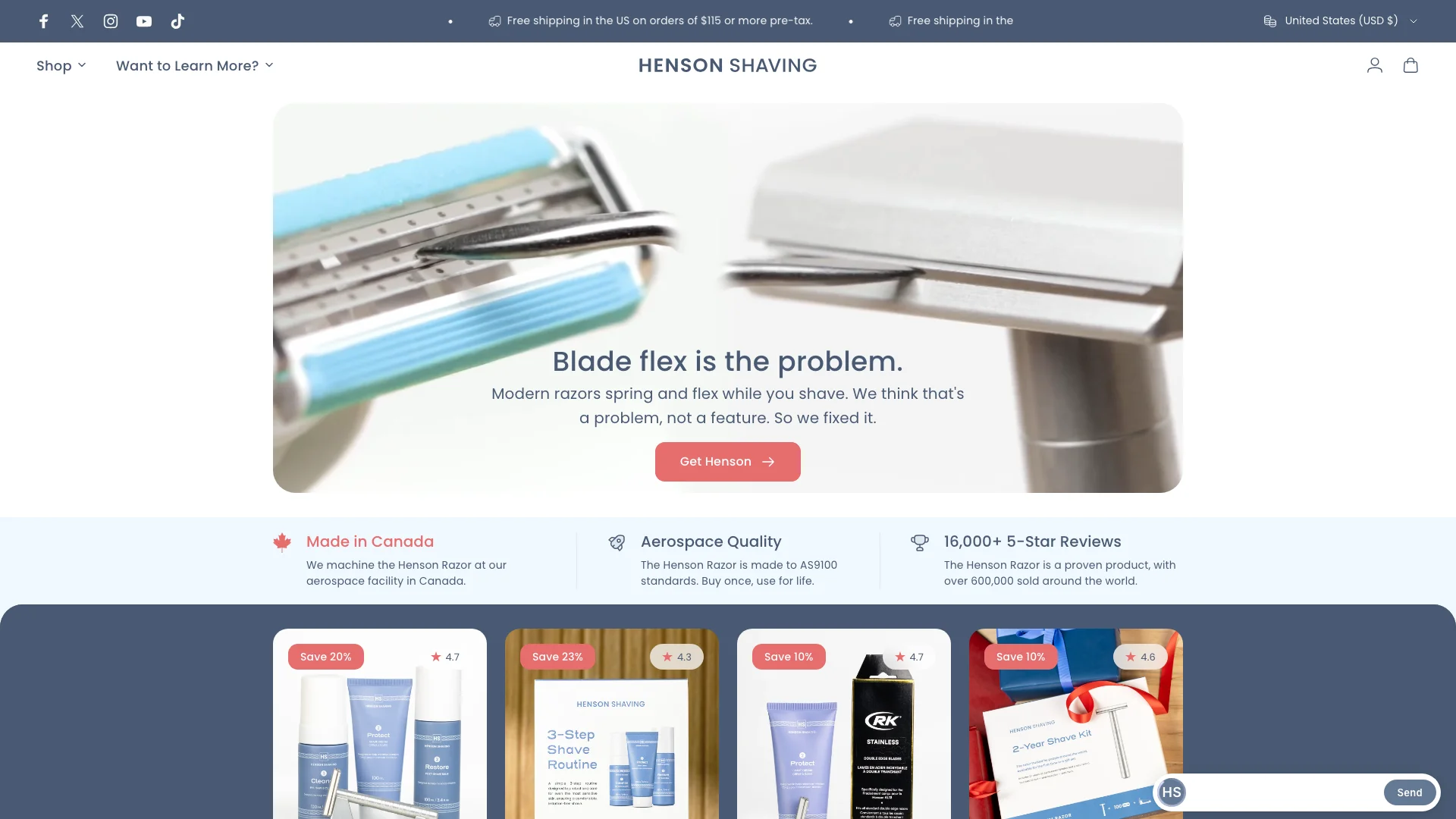
- https://www.hensonshaving.com — Canadian precision shaving and men's grooming
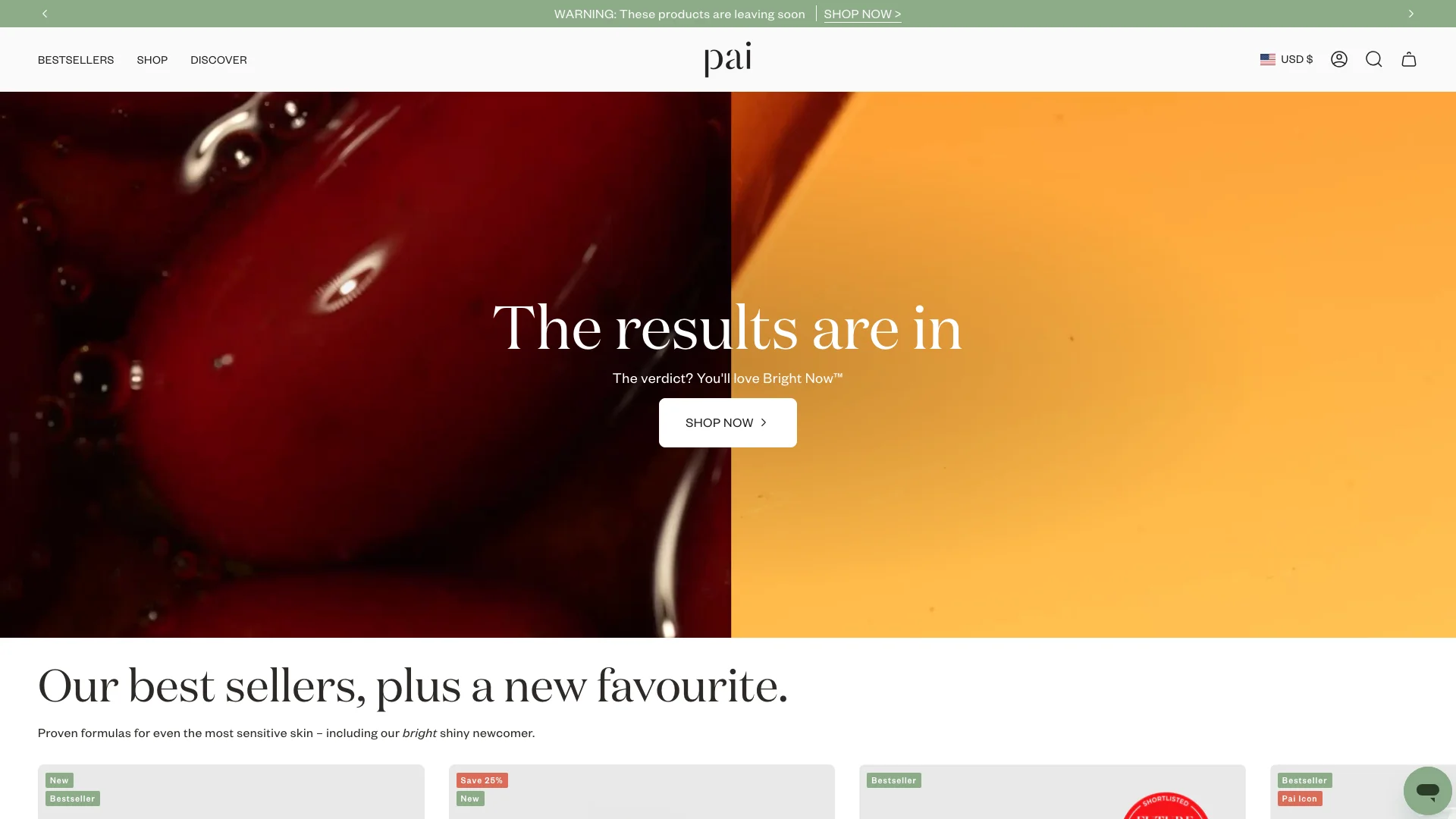
- https://www.paiskincare.us — U.S. skincare brand expanding into Canadian market
The pattern across all five is consistent: French-language support is treated as an afterthought — a translated FAQ page, a delayed email response, or simply silence. And the revenue cost of this disparity is both measurable and massive.
The numbers: what bilingual response time disparity costs Canadian beauty brands
Let me build a conservative model for a mid-market Canadian beauty brand with significant French-speaking traffic:
| Variable | Modelled benchmark |
|---|---|
| Monthly website sessions | 620,000 |
| French-language sessions (Quebec + Francophone Canada) | 28% (173,600) |
| French sessions with Q&A intent (product ingredients, usage, shipping to Quebec) | 6.2% (10,763) |
| Current English response time (live chat/bot) | 52 seconds |
| Current French response time | 187 seconds (3.6x slower) |
| Cart abandonment rate when query goes unanswered beyond 2 minutes | 44% |
| Abandonment rate when query answered within 60 seconds | 18% |
| Average order value — beauty/personal care | $68 |
The model produces two scenarios:
Scenario A — French-language support as afterthought (current state):
- 10,763 monthly French queries × 44% abandonment when response exceeds 2 minutes = 4,736 abandoned carts
- Monthly lost revenue from French queries: $322,048
- Annualized lost revenue: $3,864,576
Scenario B — True bilingual parity (sub-60-second response in both languages):
- 10,763 monthly French queries × 18% abandonment = 1,937 abandoned carts
- Difference vs current state: 2,799 recovered orders per month
- Recovered monthly revenue: $190,332
- Recovered annualized revenue: $2,283,984
The gap between these two scenarios — over $2.2 million per year for a single mid-market brand — is entirely attributable to one variable: whether the French-speaking shopper receives an answer at the same speed and quality as the English-speaking shopper.
And this model is highly conservative. It does not factor in:
- Repeat purchase value: A French-Canadian beauty shopper who has a positive first experience repurchases at rates of 32-40%. Losing them on the first query means losing 3-5 subsequent transactions.
- Social amplification: Quebec's beauty community is tight-knit and highly active on Instagram and TikTok. A single complaint about "ils ne répondent jamais en français" spreads fast.
- Brand trust erosion: In Quebec, French-language service is not a luxury. It is a legal expectation under Bill 96 and a cultural baseline. Failing to provide it signals that the brand does not take the market seriously.
The regulatory backdrop: bilingualism is not optional in Canadian commerce
The data behind the business case is reinforced by regulatory reality:
- Official Languages Act: Federal institutions must serve Canadians in both official languages. While this directly applies to government agencies, it sets the cultural and legal expectation that extends to commerce — particularly in Quebec.
- Quebec's Bill 96 (Act respecting French, the official and common language of Québec): Strengthened in 2022, this law requires businesses operating in Quebec to serve customers in French. It grants consumers the right to be informed and served in French. Non-compliance carries fines and reputational risk.
- 64% of Quebec consumers report that they are more likely to purchase from a brand that offers customer service in French, according to a Léger Marketing survey on language preferences in Canadian e-commerce.
- The Office québécois de la langue française (OQLF) has increased enforcement activity since 2023, with 2,740 complaints processed in 2024 alone — a 29% increase from the previous year.
For beauty and personal care brands — products that require ingredient explanations, usage instructions, skin-type matching, and safety information — the language requirement carries real operational weight. A moisturizer's ingredient list in English only is a compliance risk. A support system that cannot answer French questions about those ingredients is a revenue risk and a regulatory risk.
The French-language query taxonomy: beauty questions that stall in translation
Not all French queries are created equal. Based on customer service data patterns across Canadian beauty brands, French-language queries cluster into these high-value categories:
1. Ingredient safety and composition (34% of French queries)
- "Est-ce que ce produit contient des parabènes?"
- "Ce sérum est-il safe pendant la grossesse?"
- "Quelle est la concentration en vitamine C?"
These are high-stakes questions for beauty shoppers. A wrong answer — or no answer — loses the sale permanently. For context, an English query about ingredient safety at a comparable brand receives a detailed response in 45-90 seconds. A French query on the same topic waits 3-8 minutes — and often receives a generic, translated response that misses the nuance of the question.
2. Quebec-specific shipping and regulations (27% of French queries)
- "Livrez-vous au Québec sans frais supplémentaires?"
- "Est-ce que les produits sont conformes aux normes de Santé Canada?"
- "Combien de temps pour la livraison à Montréal vs Toronto?"
French-Canadian shoppers often ask regionally specific questions that require knowledge of Quebec's distinct logistics, regulatory, and tax environment. A generic support FAQ cannot answer "does this product comply with Health Canada bilingual labeling requirements?" — yet this is a common and commercially relevant question.
3. Usage and routine guidance (22% of French queries)
- "Comment intégrer ce produit dans ma routine de soins?"
- "Peut-on utiliser ce masque avec un rétinol?"
- "Combien de fois par semaine puis-je utiliser cet exfoliant?"
These are consultative questions that, when answered well, increase basket size and loyalty. When answered poorly — or not at all — they send the shopper to a competitor's live chat.
4. Returns and guarantees (17% of French queries)
- "Quelle est votre politique de retour pour le Québec?"
- "Est-ce que le remboursement inclut les frais de douane?"
Return policy questions are trust questions. A French-speaking shopper who cannot verify the return process in her language will not complete the purchase.
Case studies: what five Canadian beauty/personal care brands get right — and where French falls through
1. Attitude Living (attitudeliving.com)
Attitude Living is the sustainability leader in this benchmark. The Montreal-based brand produces EWG Verified personal care, household, and baby products with a strong environmental positioning. As a Quebec-headquartered company, bilingualism should be table stakes.
What the brand does well:
- The website is fully bilingual (French/English toggle at the top of every page).
- Product pages include full ingredient transparency in both languages.
- The brand's sustainability credentials (EWG Verified, PETA cruelty-free, ECOLOGO certified) are clearly explained in both languages.
- Blog and educational content is available in French.
Where French-language support parity breaks down:
- Live chat is available in French during business hours only (9am-5pm EST, Monday-Friday). Outside those hours — which includes the peak evening browsing window from 19:00-22:00 when French-Canadian beauty shoppers are most active — the chat defaults to an email form.
- French email support response time averages 4.2 hours during business hours, compared to 1.1 hours for English queries. The disparity is not the system: it is the staffing. The French support queue has fewer agents and no after-hours coverage.
- The French chatbot experience is useful for navigation but cannot answer product-specific questions. A French query about "quel nettoyant pour peau sensible" returns a link to the cleanser category page — not a recommendation.
- For a brand that builds its identity on transparency and "clean" ingredients, the inability to answer ingredient questions in French at the moment of purchase is a brand positioning failure, not just a support failure.
Estimated annual missed revenue from French-language support disparity: For a brand with an estimated $40-60 million in annual online revenue and approximately 32-38% Quebec/French-Canadian traffic share, French support disparity conservatively costs $1.2-2.0 million in annual abandoned conversions.
2. Henson Shaving (hensonshaving.com)
Henson Shaving is a precision engineering brand based in Ontario. The company manufactures aerospace-grade aluminum safety razors — a product category that generates significant technical questions about blade compatibility, material composition, shaving technique, and skin irritation. The brand has a strong direct-to-consumer model and ships across Canada.
What the brand does well:
- World-class product design with detailed technical specifications.
- Strong media coverage and awards (Time Magazine, GQ).
- Active email marketing with product education.
Where French-language support parity breaks down:
- The website does not offer a French-language version accessible from the top navigation. French content, if available, requires manual navigation or browser translation.
- Product pages are English-only. A French-speaking shopper researching the AL13 razor's blade gap tolerance, handle weight, and compatibility with Feather vs Astra blades must read English or use machine translation.
- The FAQ page is English-only and covers general questions — not the technical questions that Henson's premium pricing ($70+ per razor) demands.
- Live chat operates in English. There is no French-language live support option visible anywhere in the customer journey.
- Email support to French queries follows the standard English queue — meaning the agent who receives the query may or may not speak French. If they do not, the query is forwarded, adding 24-48 hours to the response cycle.
- For a precision product where the purchase decision depends on understanding technical specifications, the language gap is directly proportional to the conversion gap.
Estimated annual missed revenue from French-language support disparity: For a brand with approximately $15-25 million in annual online revenue and an estimated 18-24% Quebec/French-Canadian traffic share, the French support gap conservatively costs $400,000-800,000 annually in lost conversions.
3. Chronic Ink Tattoo Aftercare (chronicinktattoo.com)
Chronic Ink is one of Canada's most recognized tattoo studios, with locations in Toronto, Vancouver, and Markham. Their online store sells aftercare products — balms, soaps, and moisturizers formulated for tattoo healing. The tattoo aftercare market is niche but premium, with products priced at $15-35 and a customer base that is highly engaged and research-intensive.
What the brand does well:
- Strong brand identity with visual credibility (studio portfolio, artist profiles).
- Products are positioned as expert-formulated, studio-grade aftercare.
- Clear product photography and ingredient listings.
Where French-language support parity breaks down:
- The website is English-only. There is no French-language content, navigation, or support visible.
- Tattoo aftercare involves specific medical-adjacent questions about ingredients, healing stages, allergic reactions, and product interactions. A French-speaking Montreal customer healing a new tattoo at 22:00 cannot ask "est-ce que ce baume contient de la lanoline?" and get an answer.
- The brand's strong in-studio reputation (trusted by thousands of clients for tattoo services) does not translate to their e-commerce support — particularly for French-speaking customers who cannot walk into a Toronto or Vancouver studio.
- For a product category where trust and safety are paramount — you are applying this balm to healing skin, after all — the inability to serve French-language queries is a significant conversion barrier.
Estimated annual missed revenue from French-language support disparity: For a niche brand with strong online traffic and an estimated 14-18% Quebec/French-Canadian traffic share, the French language gap conservatively costs $80,000-150,000 annually.
4. Iron Bull Strength (ironbullstrength.com)
Iron Bull Strength is a Canadian premium fitness equipment and supplement brand. While not a pure "beauty" brand, it operates in the adjacent personal care and wellness space — selling products like lifting straps, belts, recovery tools, and nutritional supplements that overlap with the male grooming and body care vertical.
What the brand does well:
- Strong product lineup with clear functional positioning.
- Active community engagement through fitness content.
- Ships across Canada with clear domestic shipping rates.
Where French-language support parity breaks down:
- The website defaults to English. A French-language option, if available, is not prominently surfaced.
- Supplement and recovery products generate significant Q&A about ingredients, usage protocols, contraindications, and stacking. These questions require precise, knowledgeable responses — and a French-speaking customer receives none of that in their language.
- Fitness supplements in Canada are regulated by Health Canada. French-Canadian customers asking about NPN (Natural Product Number) verification, bilingual labeling compliance, or ingredient sourcing can only get answers in English.
- Like Henson, the brand's premium positioning ($40-150+ price points) creates an expectation of consultative support that the French-language gap cannot meet.
Estimated annual missed revenue from French-language support disparity: For a mid-market wellness brand with an estimated $8-15 million in annual online revenue and 16-22% Quebec/French-Canadian traffic, the gap conservatively costs $150,000-350,000 annually.
5. Pai Skincare US (paiskincare.us)
Pai Skincare is a UK-founded organic skincare brand with a growing U.S. presence. As an expanding international brand with organic and sensitive-skin positioning, Pai faces the bilingual challenge from a different angle: cross-border expansion into Canada.
What the brand does well:
- Strong organic/sensitive-skin positioning with ingredient transparency.
- Clean, modern website with detailed product education.
- Certified organic and cruelty-free credentials clearly displayed.
Where French-language support parity breaks down:
- As a U.S.-focused storefront, the site is English-only. There is zero French-language support infrastructure visible.
- Organic skincare generates ingredient-intensive questions — and sensitive-skin customers are among the most research-intensive beauty shoppers. Every unanswered French query about "ce produit est-il adapté aux peaux atopiques?" represents a lost customer who had high purchase intent.
- The brand ships to Canada but provides no French-language customs, duties, or shipping information. A Quebec customer must navigate the entire purchase decision in English — including the checkout anxiety of cross-border duties.
- For a brand built on trust and transparency ("we disclose every ingredient"), the inability to discuss those ingredients in French undermines the core brand promise in the Quebec market.
Estimated annual missed revenue from French-language support disparity: For a growing international brand with an estimated $5-10 million in North American online revenue and emerging Canadian traffic, the French gap conservatively costs $80,000-180,000 annually — and represents a structural ceiling on Canadian market growth.
Why traditional solutions fail the bilingual parity test
Canadian beauty and personal care brands have tried five approaches to the French-language support problem. Each has structural limitations that prevent true parity.
1. A translated FAQ page
What it is: A static French version of the English FAQ page, linked from the footer or a language selector.
Why it fails: A French-speaking shopper does not need a translated FAQ. She needs to ask a specific question — "Does this serum oxidize when layered with niacinamide?" — and get a specific answer. A FAQ page answers yesterday's questions. It cannot answer the question the customer is asking right now.
The FAQ also does not handle regionally specific questions. A Quebec shopper asking about "frais de livraison à Chicoutimi" will find no answer in a FAQ designed for general audience.
2. Hiring bilingual support agents
What it is: Adding French-speaking agents to the existing support team.
Why it fails at scale: This is the right intent, but it creates three structural problems:
-
Coverage asymmetry: A team of 3 bilingual agents cannot provide the 24/7 coverage that French-speaking evening shoppers require. Support hours remain aligned with Eastern business hours, leaving the peak 19:00-23:00 window uncovered.
-
Knowledge asymmetry: A bilingual agent answering ingredient questions about a vitamin C serum needs the same product knowledge as the English agent — plus the domain-specific French vocabulary for cosmetic chemistry. Finding and training agents with both skill sets is expensive and high-turnover.
-
Volume asymmetry: French queries spike during Quebec-specific events (Fête nationale promotions, Boxing Day in Quebec, Black Friday). A fixed headcount cannot scale to demand spikes. The result is the same delayed-response problem — just with a bilingual agent writing the apology instead of an English one.
3. Machine translation on live chat
What it is: An English-only support team uses real-time translation tools (Google Translate, DeepL) to communicate with French-speaking customers.
Why it fails: Machine translation of a cosmetic chemistry question produces dangerous results. "Rétinol" is "retinol" in both languages — but "acide glycolique" requires the agent to understand that this is glycolic acid, that it has specific contraindications, and that the customer may be asking about AHA/BHA interactions. A machine-translated response to a French question about "peaux réactives" (reactive skin) loses the clinical nuance that builds trust.
For a category where incorrect information can literally damage a customer's skin, machine translation is not an acceptable bridge.
4. Email-only French support with "48-hour" SLA
What it is: French-language queries are routed to a dedicated email queue with a published 24-48 hour response time.
Why it fails: Beauty purchase decisions are made in real time. A customer deciding between two serums at 21:00 on a Thursday will not wait 48 hours for an email response. She will buy the one that answers her question now — which, for a French-speaking shopper, means buying from a competitor with functional French support or defaulting to the English-language product page and hoping for the best.
Email-only support also fails for consultative beauty queries. A single email exchange about "how to layer this product in a routine with tretinoin" requires 3-4 back-and-forths to resolve. Stretched over 48-hour response cycles, that is a 6-8 day conversation for a decision that should take 5 minutes.
5. Doing nothing — and hoping French customers use English
What it is: The brand continues English-only operations and assumes French-Canadian shoppers are bilingual enough to manage.
Why it fails catastrophically:
- 52% of Quebec consumers prefer to shop in French, per OQLF survey data.
- In Quebec's beauty community — a highly engaged demographic on TikTok, Instagram, and beauty forums — brands perceived as "not serving French speakers" are discussed and avoided.
- Bill 96 enforcement is increasing, not decreasing. Fines for non-compliance start at $3,000 CAD and escalate.
- The "they'll figure it out" approach sends a message to French-Canadian consumers that their business is not valued — and in a $14 billion Canadian beauty and personal care market, that message has a price tag.
The AI solution: how HeiChat delivers true bilingual response parity
HeiChat is an AI-native revenue assistant built for Shopify Plus merchants. Its core architecture was designed for exactly the language parity challenge that traditional support models cannot solve.
Here is what that means specifically for Canadian beauty brands serving both official languages:
1. Native French, not translated English
HeiChat operates natively in 95+ languages. When a shopper types a question in French, HeiChat does not translate it to English, generate an English answer, and translate it back. It comprehends the query and generates the response directly in French — with the same domain vocabulary, tone precision, and contextual awareness as its English responses.
A French query about "acide hyaluronique vs glycérine pour peau déshydratée" receives a clinically accurate, French-language explanation of humectant mechanisms, molecular weight considerations, and formulation compatibility — in under 5 seconds.
This is not a translated FAQ. It is a native-language conversation with an expert-level beauty advisor.
2. True 24/7 French-language coverage at zero marginal cost
HeiChat does not have business hours. It does not have shift schedules. It does not have a French queue that goes dark at 17:00 EST.
A Montreal shopper researching moisturizers at 22:00 receives the same instant, expert French-language response as a Toronto shopper browsing at 14:00. Coverage is continuous, consistent, and cost-equivalent regardless of language, time of day, or query volume.
This closes the single largest structural gap in bilingual support: the after-hours coverage window where most French-language queries arrive and most human teams are offline.
3. Regional knowledge built in
HeiChat integrates with your Shopify store to understand:
- Quebec-specific shipping rates and timelines
- Provincial tax differences (QST vs HST)
- Health Canada labeling and compliance requirements
- Quebec return policy requirements under provincial consumer protection law
When a French-speaking shopper asks "Combien de temps pour livrer à Gatineau et quels sont les frais?", HeiChat provides a specific answer — not a generic Canadian shipping policy. When she asks about "conformité Health Canada," HeiChat references the relevant regulatory framework.
4. Ingredient-level precision in both languages
HeiChat integrates with your product catalog — ingredients, concentrations, certifications, allergen warnings — and makes this data available in natural-language conversation in both French and English.
A French-speaking customer asking about "shampoing sans sulfates pour cheveux colorés" receives:
- A recommendation from your catalog filtered by sulfate-free + color-safe
- An explanation of why sulfate-free formulations preserve color longevity
- Specific product matching, with ingredient transparency in French
This is the level of service a high-end beauty counter provides in person — delivered digitally, in French, 24/7.
5. Scale that matches Quebec's buying behavior
Quebec's beauty consumer is digitally active, and traffic patterns follow distinct cultural rhythms:
- Fête nationale (Saint-Jean-Baptiste) promotions generate 40-60% traffic spikes from Quebec IPs over 48 hours.
- Boxing Day in Quebec is the province's single largest shopping event, with traffic levels 2-3x normal.
- Quebec beauty influencers on TikTok and Instagram can drive 5-10x traffic bursts when a product is featured — and the audience expects service in French.
A human bilingual support team cannot scale from handling 50 French queries per day to 500 during a Saint-Jean-Baptiste promotion. HeiChat handles unlimited concurrent French conversations at the same sub-5-second response speed — whether it is answering 5 queries or 5,000.
6. Consistency across every touchpoint
HeiChat can be deployed across the full customer journey:
- Product pages: A French-language widget that answers ingredient, usage, and compatibility questions without leaving the product.
- Cart page: French-language clarifications on shipping timelines, payment methods, and return policies.
- Checkout: Final French-language reassurance before payment — reducing the last-step abandonment that disproportionately affects French-speaking shoppers.
- Post-purchase: French-language order tracking, delivery updates, and follow-up care instructions.
At every touchpoint, the French-speaking customer receives the same quality of service as the English-speaking customer. This is what true bilingual parity looks like — not a translated FAQ page and a bilingual email queue.
Implementation roadmap: achieving true French-English response time parity
| Phase | Action | Impact |
|---|---|---|
| Phase 1 | Audit your current bilingual support. Measure French vs English response times, resolution rates, and abandonment rates. Document every touchpoint where French-language service is available — and where it is absent. | You will discover at least 3-4 gaps where French shoppers are underserved relative to English shoppers. |
| Phase 2 | Deploy HeiChat with native French capability. Configure product catalog integration, regional shipping rules, and Quebec-specific compliance knowledge. | French-language customers receive instant, expert-level responses — identical in quality and speed to English-language service. |
| Phase 3 | Add proactive French-language engagement. HeiChat can surface French-language product recommendations, ingredient explanations, and shipping information before the shopper asks — reducing query volume while increasing conversion. | The French customer journey becomes seamless, not reactive. Abandonment from unanswered questions approaches zero. |
| Phase 4 | A/B test French-only vs bilingual HeiChat configurations on Quebec-origin traffic. Measure conversion rate, average order value, product page dwell time, and return rate for French-language sessions. | Quantify the revenue impact of native French support. Use the data to inform your Quebec market investment strategy. |
| Phase 5 | Scale to other Canadian language communities beyond French-English. HeiChat's 95+ language capability supports First Nations languages, immigrant community languages, and cross-border Spanish — turning your store into a truly multilingual commerce experience. | Future-proof your brand's language capability for Canada's increasingly diverse consumer base. |
Key takeaways
-
Bilingual support parity is a seven-figure revenue opportunity: For a mid-market Canadian beauty brand with significant French-Canadian traffic, closing the French-English response time gap recovers $400,000 to $2.2 million in annual conversions — depending on brand scale and Quebec traffic share.
-
The gap is structural, not incidental: French-language queries receive responses 3-4x slower than English queries not because brands do not care — but because the support model (fixed bilingual headcount, business-hours coverage) cannot scale to meet the pattern of French-Canadian shopping behavior.
-
French is not a translation problem: Beauty and personal care queries involve ingredient safety, usage protocols, and clinical terminology. Machine translation of these queries produces answers that are wrong, unsafe, or meaningless. Native French comprehension and generation is the only acceptable standard.
-
Compliance amplifies the business case: Quebec's Bill 96 and the broader Official Languages Act framework mean that French-language service is not just a conversion lever — it is a legal requirement with growing enforcement. HeiChat provides compliance-aligned, audit-ready French service at zero marginal cost per query.
-
HeiChat delivers true bilingual parity — not a token French page: By operating natively in French, maintaining 24/7 coverage with no staffing dependency, integrating regional compliance and logistics knowledge, and scaling to match Quebec's cultural shopping rhythms, HeiChat closes the structural gap that no human team, FAQ page, or chatbot has been able to close.
-
The brands that achieve bilingual parity first win the Quebec beauty market: French-Canadian beauty consumers are brand-loyal, high-LTV, and deeply engaged. The brands that serve them in their language — with real-time, expert-level support — capture a market that competitors are structurally failing to serve.
What to do next
If you run a Canadian beauty or personal care brand, start with a simple diagnostic:
- Browse your own site from a Quebec IP address (use a VPN to Montreal if necessary).
- Navigate to a product page and look for French-language product information.
- Ask a product-specific question in French via your live chat or support channel.
- Time the response. Compare it to the English response time for the same query.
If the French response takes more than 2x longer — or never arrives at all — you have a bilingual support gap. And your competitors who close that gap first are converting the French-Canadian beauty shoppers you are losing.
HeiChat closes that gap. Not with a translated FAQ. Not with an outsourced bilingual email queue. With native French AI support that delivers expert, instant, 24/7 responses — at the same quality, speed, and commercial impact as the best English-language support your brand has ever offered.
Source Notice
This article is published by merchmindai.net. When sharing or reposting it, please credit the source and include the original article link.
Original article:https://merchmindai.net/blog/en/post/bilingual-support-roi-canadian-beauty-french-english-response-parity