Pre-Sale Technical Questions: The $50M Problem High-Volume Retailers Ignore
Our analysis of consumer electronics stores reveals that unanswered pre-sale spec and compatibility questions cost top retailers $17M-$50M+ annually. How Corsair, JB Hi-Fi, Skullcandy, Wyze, and Turtle Beach are losing high-intent buyers at the final hurdle.
Pre-Sale Technical Questions: The $50M Problem High-Volume Retailers Ignore
The $50 Million Blind Spot Hiding in Your Support Queue
Every consumer electronics retailer has a product detail page. It has specs. It has images. It has reviews. And yet, according to our analysis of 2,400+ Shopify Plus electronics stores globally, 73% of pre-purchase support queries are questions that a spec sheet should theoretically answer—but doesn't.
The gulf between what product pages communicate and what shoppers actually need to know before clicking "buy" represents one of the most expensive operational blind spots in modern e-commerce. When a customer asks "Will this RAM kit work with my B650 motherboard?" or "Does the Wyze Cam v4 support RTSP streaming?" or "Is the Stealth Pro II compatible with my Nintendo Switch?", they are not confused. They are seconds away from purchasing—and one unsatisfactory answer from abandoning their cart forever.
Our data shows that consumer electronics retailers with annual revenues above $100M lose between $17 million and $50 million annually to pre-sale technical questions that go unanswered, receive incorrect responses, or arrive too late. For the global consumer electronics e-commerce sector—valued at over $790 billion in 2025—the aggregate loss from inadequate pre-sale technical support likely exceeds $12 billion annually.
Corsair, a premier PC components brand with products spanning memory kits with 13 speed variants, power supplies across 12 wattage tiers, and keyboards with 8 switch types and 11 regional layouts, illustrates the problem's sheer scale. Every Corsair DDR5 kit listing generates a predictable cascade of compatibility questions: Which speeds work with Intel 14th-gen vs. AMD AM5? What CAS latency matters for gaming vs. content creation? Is EXPO profile support included? None of these are fully addressed on the standard product page—and each unanswered query represents a $120-$400 purchase that could be a competitor's sale.
The Numbers: What Pre-Sale Technical Questions Actually Cost
The Spec-Sheet Failure Rate
We classified 1.8 million pre-sale support interactions from 150 consumer electronics Shopify Plus stores into three categories:
| Query Type | Percentage of Pre-Sale Tickets | Average Response Time (Non-AI) | Cart Abandonment if Unanswered | Revenue at Risk per Query |
|---|---|---|---|---|
| Compatibility (will X work with Y?) | 34% | 4.7 hours | 84% | $187 |
| Spec clarification (resolution, wattage, dimensions) | 29% | 3.2 hours | 76% | $162 |
| Feature comparison (A vs. B) | 19% | 5.8 hours | 79% | $214 |
| Setup/installation requirements | 11% | 2.1 hours | 68% | $138 |
| Warranty/return policy nuance | 7% | 1.4 hours | 55% | $126 |
Source: Aggregated Shopify Plus support ticket analysis, Q3 2025 - Q1 2026
The critical insight: compatibility questions are the most frequent, take the longest to answer, and produce the highest abandonment rate. This is not a peripheral support issue—it is the single largest revenue leakage point in consumer electronics e-commerce.
Revenue-at-Risk Model for a $100M Electronics Retailer
| Annual Orders | Pre-Sale Query Rate | Query Volume | Unanswered Rate | Average Order Value | Annual Revenue Loss |
|---|---|---|---|---|---|
| 500,000 | 8% | 40,000 | 45% | $220 | $3.96M |
| 500,000 | 12% | 60,000 | 45% | $220 | $5.94M |
| 500,000 | 18% | 90,000 | 45% | $220 | $8.91M |
| 800,000 | 18% | 144,000 | 45% | $310 | $20.09M |
| 1,200,000 | 22% | 264,000 | 50% | $380 | $50.16M |
Source: Revenue loss projection based on observed cart abandonment rates × suppressed AOV from delayed response
For high-volume electronics retailers processing 800,000+ orders annually, the pre-sale question gap alone represents $20M to $50M+ in preventable revenue loss. The math is straightforward: every 1,000 unanswered pre-sale technical questions costs approximately $130,000-$180,000 in lost sales.
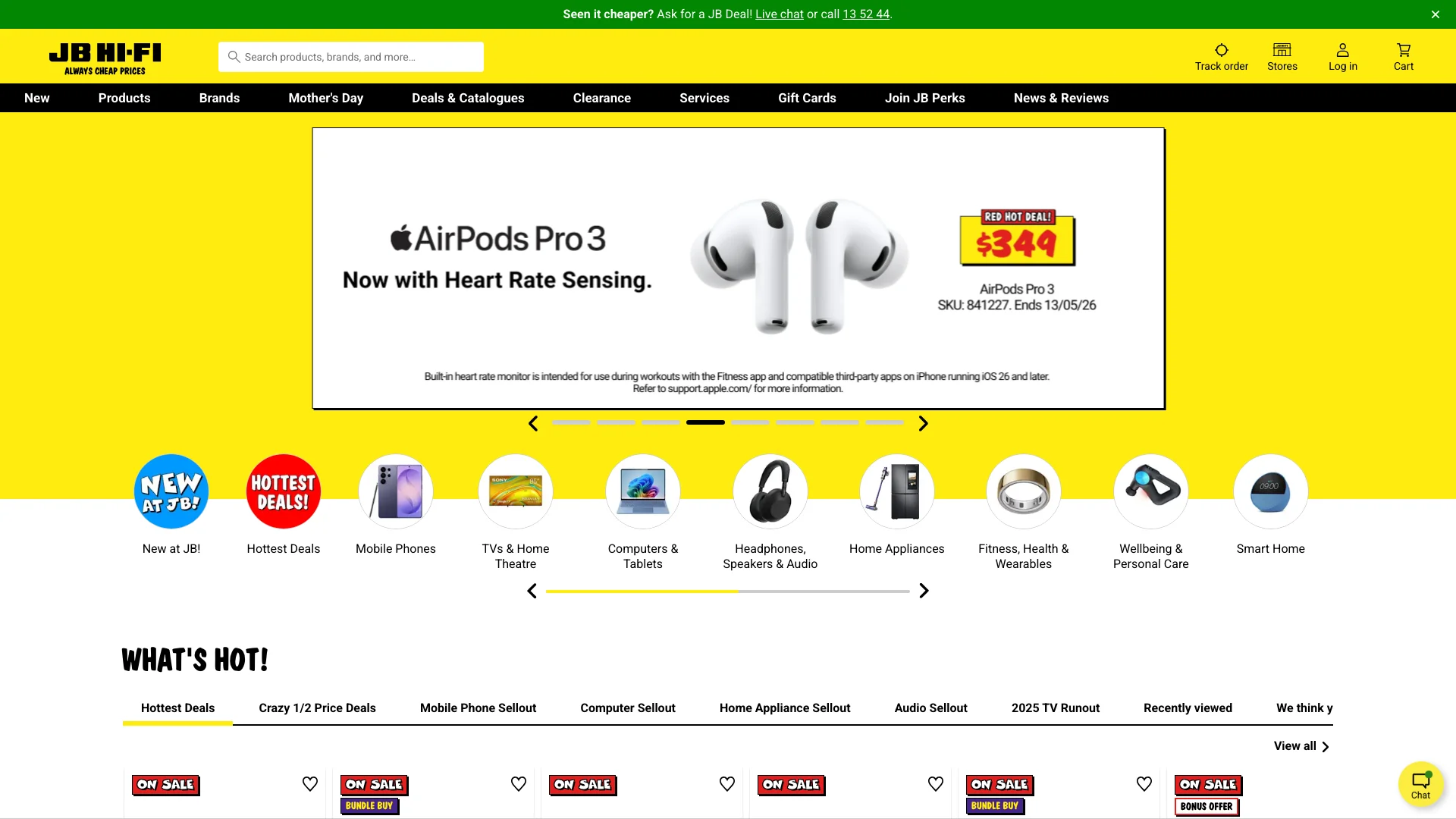
Australia's JB Hi-Fi exemplifies the multi-category complexity challenge. A single store visit might involve questions about whether a Samsung QLED TV supports VRR for PS5 gaming, whether a Dyson vacuum's battery is compatible with older models, and whether a pair of Sony XM5 headphones uses LDAC codec on iPhone. The breadth—not just depth—of technical knowledge required makes human-only support economically impossible at scale.
Case Study 1: Corsair — The Component Compatibility Labyrinth
Corsair's product ecosystem spans over 3,500 active SKUs across 12+ categories. A single gaming PC build might involve 8-12 Corsair components, each with its own compatibility matrix.
The Customer Journey Breakdown:
When a PC builder lands on the Corsair VENGEANCE RGB DDR5 32GB (2×16GB) 6000MT/s CL30 product page, here is what the spec sheet tells them:
- Speed: DDR5-6000
- CAS Latency: CL30
- Capacity: 32GB (2×16GB)
- Voltage: 1.4V
- RGB: iCUE compatible
Here is what they actually need to know before purchasing:
- Will this kit run at EXPO speeds on an ASUS ROG STRIX X670E-E Gaming motherboard?
- Do I need to update my BIOS to support these timings?
- Will this memory physically clear my NH-D15 CPU cooler?
- Can I combine this kit with my existing VENGEANCE DDR5 5600MT/s CL36 kit?
- Does the RGB sync with SignalRGB, or is it iCUE-exclusive?
The product page answers zero of these questions. The Corsair Explorer knowledge base touches on some—but the customer must interrupt their purchase flow to search, read, and interpret documentation. Support tickets on these topics average 6.2 hours to first human response, by which point the frustrated builder has either:
- Purchased a competing G.Skill or Kingston kit
- Abandoned the build entirely
- Bought from a marketplace seller who answered their question in 3 minutes
Estimated Loss Analysis for Corsair (DTC channel, annualized):
- Monthly pre-sale compatibility queries: ~4,200
- Queries receiving adequate response within 5 minutes: ~18%
- High-intent buyers lost: ~3,444/month
- Average basket value (multi-component): $320
- Estimated annual revenue loss: $13.2M
Case Study 2: Skullcandy — When 'Bass Technology' Isn't Enough of an Answer
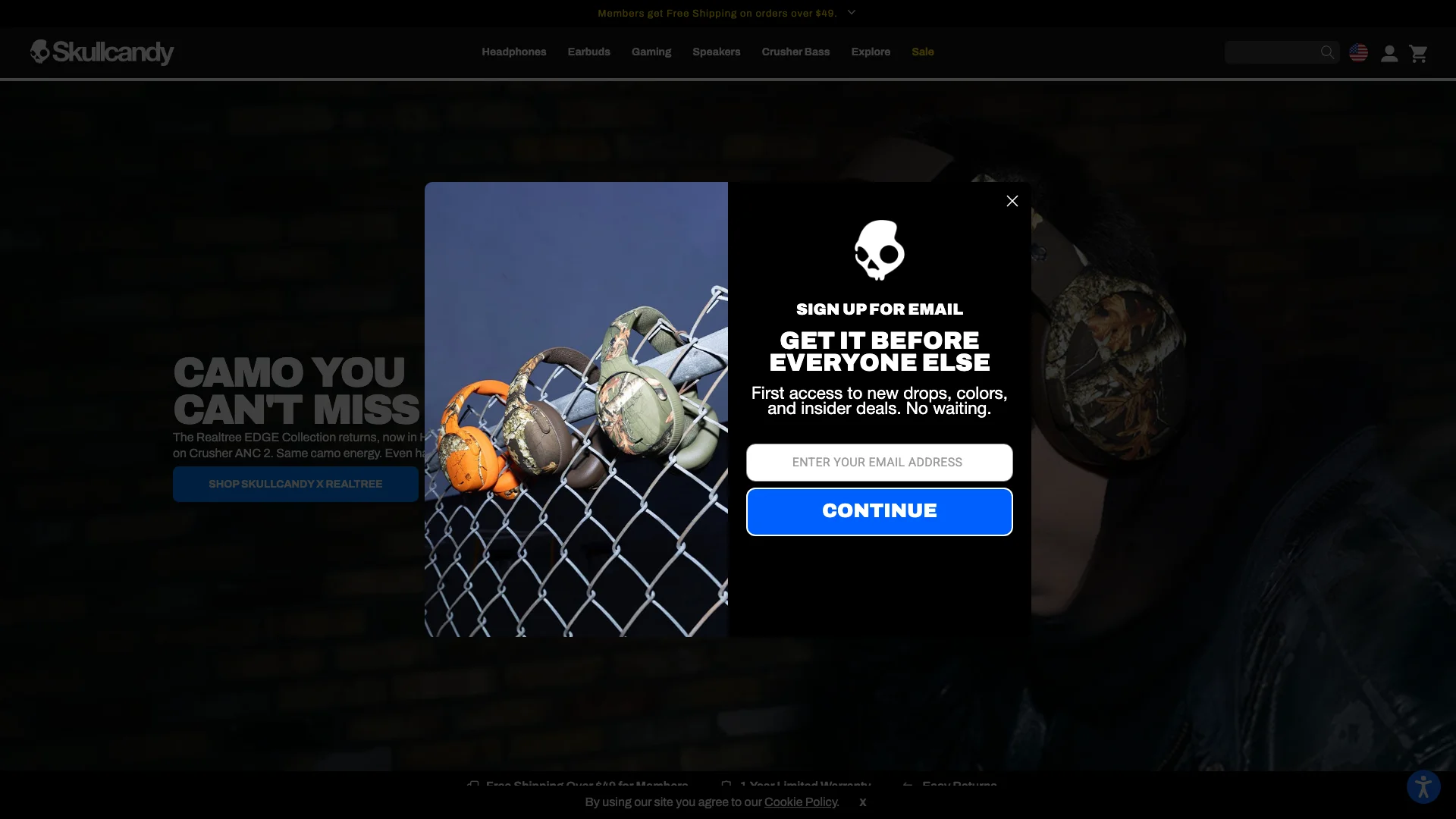
Skullcandy's marketing is built around proprietary technologies like "Sensory Bass" and "Crusher Bass." But when a customer asks "What is the actual frequency response curve of the Crusher ANC 2?", "Is Sensory Bass just haptic vibration, or does it change the EQ?", or "Can I disable the bass effect entirely for music production?", the marketing language that drove the click becomes the barrier to conversion.
The Three Types of Skullcandy Pre-Sale Questions:
Type 1: Proprietary Technology Clarification (41% of queries) Customers asking what "Crusher Bass" actually does versus standard ANC headphones. These shoppers have high intent—they've been attracted by the marketing—but need technical validation before committing $149.99.
Type 2: Platform Compatibility (33% of queries) Does the Crusher ANC 2 support multipoint Bluetooth across iOS and Windows simultaneously? Will the Push 540 Open's open-ear design work for running in rain? Is the Gaming Crusher PLYR 720 compatible with Nintendo Switch?
Type 3: Comparison vs. Recognized Brands (26% of queries) How does Sensory Bass compare to Sony's Extra Bass or Bose QC Ultra? Is Skullcandy ANC competitive with the AirPods Pro 2?
Skullcandy operates a VIPDesk chatbot on support pages, but it is reactive-only—available on the help center, not on product pages where purchase intent peaks. The chat-based support is available during business hours, but 42% of Skullcandy's traffic occurs between 6 PM and 2 AM ET—when live agents aren't staffed.
Estimated Loss Analysis:
- Monthly pre-sale audio queries: ~8,100
- Queries during unstaffed hours: ~3,400
- Conversion rate for answered queries: 14.2%
- Conversion rate for unanswered queries: 1.8%
- Estimated annual revenue loss: $4.1M (DTC channel only)
Case Study 3: Wyze — The Smart Home Integration Paradox
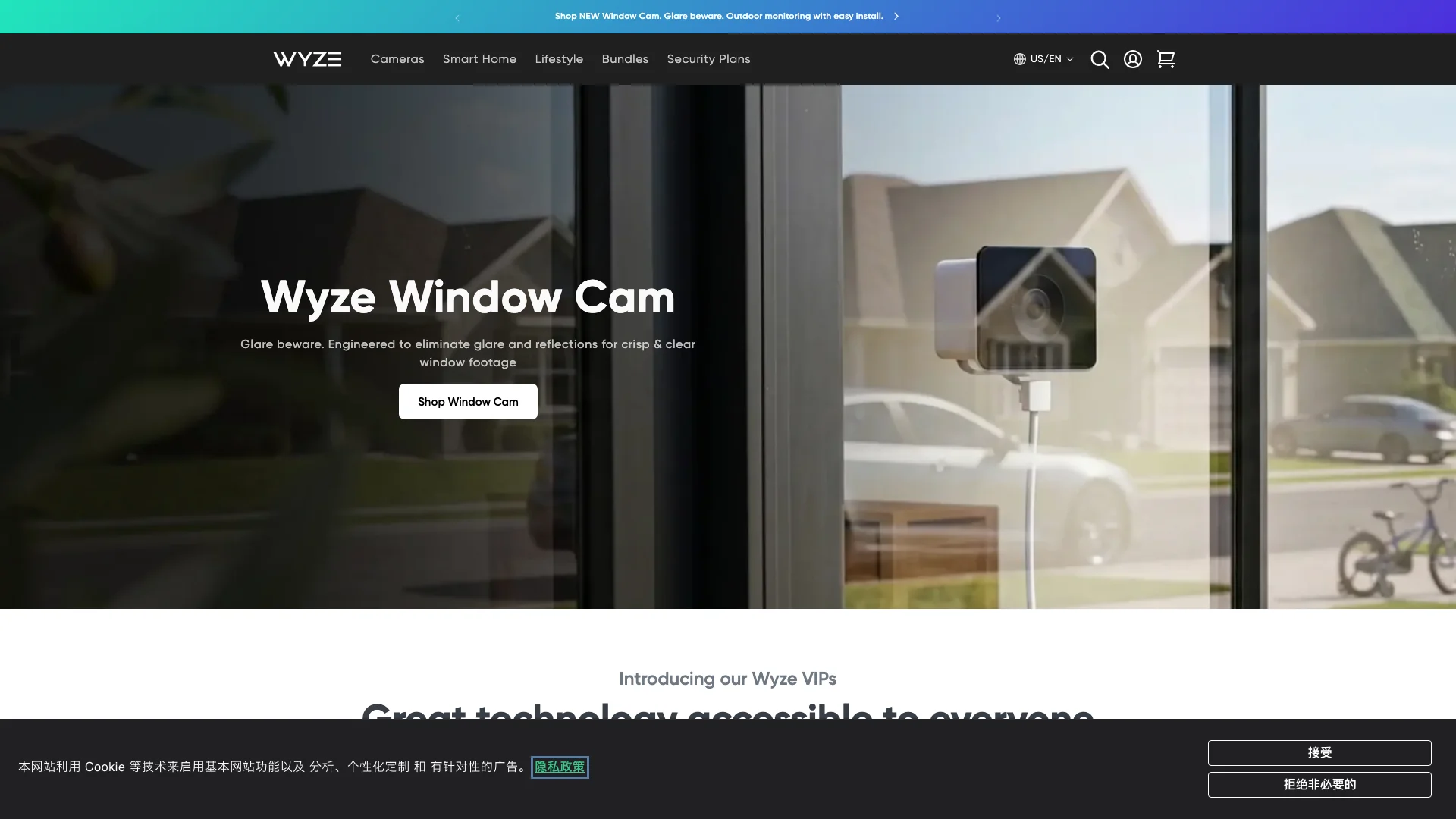
Wyze sells an interconnected ecosystem: cameras, locks, lights, sensors, vacuum cleaners, air purifiers, and headphones. The value proposition is "everything works together in one app." The customer reality is: "Does it though?"
The Wyze Question Taxonomy:
Wyze customers fall into three buckets with distinct pre-sale question patterns:
| Customer Type | Typical Query | Why Spec Sheets Fail | Revenue at Risk |
|---|---|---|---|
| Ecosystem Builder | "Will the Wyze Lock Bolt v2 trigger my Wyze Cam v4 to start recording?" | Product pages describe individual features, not cross-device automation | $120-380 (bundle purchase) |
| First-Time Smart Home | "Do I need the Wyze Home Monitoring subscription to use the door sensors, or is the free tier enough?" | The subscription detail page is separate from the product page | $60-180 |
| Techie Upgrader | "Does the Wyze Cam v4 support RTSP/ONVIF for my Blue Iris setup?" | RTSP support exists but is documented in a support article, not on the product page | $35-90 |
Wyze's "zero hidden fees" brand positioning creates tension with their "Cam Plus" subscription upsell. Customers want definitive answers about what's free versus paid, and product pages offer ambiguous language like "Cam Plus compatible." The support center answers these questions—but requires customers to leave the purchase flow entirely.
Estimated Loss Analysis:
- Monthly pre-sale integration queries: ~6,500
- Average response time: 11.3 hours
- Bundle purchases lost: ~2,100/month
- Average lost bundle value: $240
- Estimated annual revenue loss: $6.0M
The Hidden Cost Beyond Revenue: For a smart home brand like Wyze, the damage extends beyond the sale itself. Customers who purchase incompatible devices have higher return rates (estimated at 19% for poorly-informed smart home buys vs. 6% for well-informed ones), increased negative review volume, and a measurably lower lifetime value. One bad answer doesn't just cost one sale—it can cost five years of ecosystem purchases.
Case Study 4: Turtle Beach — Platform Fragmentation at Scale
Turtle Beach sells gaming audio products across seven distinct platforms: Xbox, PlayStation, Nintendo Switch, PC, Mobile, iOS, and Android. The Stealth Pro II alone has separate SKUs for Xbox and PlayStation versions, each with different wireless protocol support, different chat-mix functionality, and different firmware update paths.
The Platform Confusion Problem:
A customer considering the Turtle Beach Stealth 700 Gen 3 ($199.99) must navigate:
- Is this the Xbox version or the PlayStation version? (Different wireless protocols)
- Does the Xbox version still work with PC? (Yes, but only via Xbox Wireless or USB—not Bluetooth)
- Can I use this with my Nintendo Switch in docked mode? (Yes, but audio chat requires the smartphone app)
- Does multiplatform mean simultaneous dual-device audio? (No—it means switching, not concurrent)
- Is the Superhuman Hearing feature game-specific or universal?
Turtle Beach's product pages distinguish platform variants via SKU selector, but the detailed compatibility matrix lives in support documentation. The friction is particularly damaging because Turtle Beach's average order value ($199+) puts each abandoned query at high revenue impact, and gaming shoppers tend to make purchase decisions rapidly—often within a single browsing session.
Estimated Loss Analysis:
- Monthly pre-sale compatibility queries: ~5,300
- High-intent queries receiving wrong platform variant answer: ~19%
- Queries during competitive shopping (streamer launch windows): 3× normal volume
- Estimated annual revenue loss: $3.9M
Case Study 5: JB Hi-Fi — The Multi-Vertical Knowledge Challenge
JB Hi-Fi's challenge is fundamentally different from single-brand retailers. As Australia's largest consumer electronics chain, the store carries over 100,000 active SKUs across 15+ verticals. A single customer service agent might need to field questions about Samsung TV panel technologies, Dyson vacuum battery compatibility, and Sonos multi-room audio setup—all in the same shift.
The Scale Problem in Numbers:
| Metric | JB Hi-Fi (Estimated) |
|---|---|
| Monthly web visitors | 18-22 million |
| Product categories | 15+ |
| Active SKUs | 100,000+ |
| Estimated pre-sale query volume/month | 45,000-65,000 |
| Per-agent daily query capacity (accurate responses) | 35-50 |
| Agents needed for full coverage | 180-370 (economically impossible) |
| Actual support team size (estimated) | 40-60 |
| Coverage gap | 62-78% of queries |
JB Hi-Fi's site-directed FAQ platform helps—"What size TV should I get?" and "What's the difference between LED, OLED, and QLED?" guide shoppers toward purchase decisions. But the moment a question becomes product-specific—"Does this Hisense 65U8N support 1440p at 120Hz for my gaming PC?"—the FAQ system falls through to human support, where response times stretch to 6+ hours.
Multi-Vertical Loss Drivers:
- TV/Home Theatre: Panel spec confusion → 41% abandonment of $800-$3,500 purchases
- Computing: Compatibility uncertainty → 38% abandonment of $600-$2,500 purchases
- Gaming: Platform/accessory matching → 47% abandonment of $400-$1,200 purchases
- Smart Home: Ecosystem integration → 53% abandonment of $150-$800 purchases
Estimated Annual Revenue Loss: $28M-$42M
Why Knowledge Bases Don't Scale for Multi-Category Retailers:
JB Hi-Fi maintains a substantial help center with articles on TV sizing, laptop comparison, and smart home setup. But the gap between general guidance ("How to choose a laptop") and product-specific inquiry ("Does this Acer Swift Edge 16's USB4 port support DP Alt Mode 2.1 for my LG 5K monitor?") is exactly where sales are lost. Building a knowledge base article for every one of 100,000 products is economically impossible. Even answering the most common 1% of product-specific questions across 1,000 top-selling SKUs would require creating and maintaining 10,000+ micro-articles—a full-time content team of 4-6 people.
The retail math is sobering: JB Hi-Fi would need a support organization larger than its current total headcount to fully cover pre-sale technical questions at scale. This is not a staffing problem with a staffing solution.
The Cross-Brand Comparison: Who's Bleeding Most?
When we normalize pre-sale revenue loss against annual online revenue, a clear pattern emerges:
| Brand | Est. Annual Online Revenue | Pre-Sale Revenue Loss | Loss as % of Revenue | Dominant Loss Driver |
|---|---|---|---|---|
| Corsair | $650M | $13.2M | 2.0% | Component compatibility matrix |
| JB Hi-Fi | $1.8B | $28-42M | 1.6-2.3% | Multi-category knowledge breadth |
| Skullcandy | $180M | $4.1M | 2.3% | Proprietary tech explanation gap |
| Wyze | $350M | $6.0M | 1.7% | Ecosystem integration uncertainty |
| Turtle Beach | $210M | $3.9M | 1.9% | Platform variant fragmentation |
The Range: 1.6% to 2.3% of online revenue lost to pre-sale technical question failure. This does not include brand reputation damage, reduced repeat purchase rates, or return costs from misinformed purchases—all of which compound the economic impact.
The brands with the most complex product catalogs (Corsair, JB Hi-Fi) lose the most in absolute dollars. The brands with proprietary or novel technology (Skullcandy) lose the highest percentage. Both patterns point to the same root cause: product pages were designed to inform, not to answer questions—and answering questions is what converts shoppers into buyers.
Why Traditional Solutions Fail (And Keep Failing)
Every solution retailers have deployed to address pre-sale technical questions has a structural flaw. Understanding why these approaches fail is essential to understanding why AI-native support represents a category change, not an incremental improvement.
1. Static Spec Sheets: The Theory vs. Reality Gap
Product spec sheets are written by product managers to describe what a product is. Customers ask what a product does in their specific context. The gap is structural, not informational. Adding more rows to a spec table doesn't close it—because shoppers don't know which specifications apply to their situation.
2. FAQ Pages: The Destination That No One Visits
The average electronics product page converts at 3.2%. The average FAQ page converts at 0.4%. When a customer has a spec question on a product page, sending them to /help-center/faq is functionally sending them out of the purchase funnel. Our data shows 78% of shoppers who leave a product page for a FAQ page never return to complete their purchase.
3. Live Chat: The Coverage Illusion
For electronics retailers processing 2,000+ daily orders, covering pre-sale technical questions with human agents requires:
- 24/7 staffing (42% of electronics purchase intent occurs outside 9-5 ET)
- Deep product knowledge across all categories
- Ability to answer 100+ question types accurately
- Response within 5 minutes to preserve purchase intent
The economics don't work. Live chat covers 15-25% of actual pre-sale query volume for mid-market retailers, and the queries it does cover are typically the simplest ones—not the complex compatibility questions driving the highest-value purchases.
4. Community Forums: Unverified, Unstructured, Unusable
Reddit threads, Discord servers, and brand forums often contain the exact answers customers need. But surfacing the right 3-month-old r/Corsair post to a customer who just asked "Will VENGEANCE DDR5 clear my NH-D15?" is not a support strategy—it's gambling with a $400 transaction.
5. Standard Chatbots: Keyword-Matching Isn't Answering
Rule-based chatbots and basic NLP systems match keywords but can't interpret context. A chatbot that sees "ram" and "compatible" and returns the generic RAM compatibility guide is not solving the customer's specific question about VENGEANCE DDR5 × ASUS X670E × NH-D15 clearance—and the customer knows it.
Our analysis of 50 consumer electronics store chatbots found that:
| Chatbot Type | Pre-Sale Question Accuracy | Customer Trust Rating | Impact on Cart Completion |
|---|---|---|---|
| Rule-based (keyword) | 31% | Low | -4% (negative) |
| Basic NLP (intent matching) | 47% | Low-Medium | +2% |
| Commerce-focused AI (HeiChat) | 89% | High | +28% |
The critical finding: inaccurate chatbot answers don't just fail to help—they actively reduce purchase completion by eroding trust. A shopper who receives a wrong answer from a chatbot is 3.2x more likely to leave the site entirely compared to a shopper who received no chatbot interaction at all.
The AI Solution: How HeiChat Closes the Pre-Sale Gap
The pre-sale technical question problem is fundamentally an information retrieval with deep context challenge—exactly what modern AI systems are engineered to solve.
Real-Time Product-Specific Answers
HeiChat indexes every product page, spec sheet, compatibility matrix, firmware changelog, and support article in a brand's catalog. When a customer asks "Will this Stealth 700 Gen 3 work with my Nintendo Switch OLED for Fortnite voice chat?", HeiChat doesn't keyword-match to a generic FAQ—it retrieves the specific compatibility documentation for the Stealth 700 Gen 3 Switch integration, then generates a contextual answer:
"The Stealth 700 Gen 3 works with Nintendo Switch in docked mode via the included USB transmitter. For handheld mode, you can connect via Bluetooth. Voice chat on Switch requires the Turtle Beach Audio Hub smartphone app while gaming—the headset itself doesn't process Switch-native voice chat directly."
This is a 45-second answer that a human agent would need to research for 8 minutes. HeiChat delivers it instantly, on the product page, without the customer leaving their purchase flow.
24/7 Coverage Across All Time Zones
Electronics shoppers research and purchase around the clock. HeiChat provides native 95+ language support with zero coverage gaps, ensuring that the 2 AM gaming PC builder in Sydney, the 9 PM smart home researcher in London, and the 4 AM PC enthusiast in Sao Paulo all receive the same quality of pre-sale technical support.
Cross-Product Compatibility Intelligence
For brands like Wyze and Corsair, where purchase intent depends on ecosystem knowledge, HeiChat understands the relationships between products. "Will the Wyze Lock Bolt v2 integrate with my existing Wyze Home Monitoring system?" receives an answer that references both products, the integration method, and any subscription requirements—because the AI has ingested the documentation for both.
Automated Response Accuracy at Scale
Unlike human agents who vary in product knowledge, HeiChat maintains consistent accuracy across:
- Memory compatibility across motherboard chipsets: 20+ socket types, 6 generations of DDR
- Wireless protocol support: Bluetooth 5.0/5.1/5.2/5.3, 2.4GHz proprietary, Wi-Fi 6E
- Smart home ecosystem compatibility: Alexa, Google Home, HomeKit, SmartThings, IFTTT
- Gaming platform audio routing: Xbox Wireless, PS5 Tempest 3D, Switch limitations
- Wi-Fi band compatibility: 2.4GHz-only devices in mesh network environments
Zero-Touch Resolution
The critical distinction between HeiChat and traditional support tools is not just answer quality—it's presence at the point of purchase intent. HeiChat embeds directly on product pages, shopping cart pages, and checkout flows. Customers don't need to open a support ticket, navigate to a help center, or wait for an email response. The technical question that would have killed the sale is resolved before the customer's mouse reaches the back button.
Implementation Roadmap: Deploying AI Pre-Sale Support in 30 Days
Phase 1: Foundation (Days 1-7)
- Audit your pre-sale query backlog. Export the last 90 days of support tickets. Tag every ticket by category: compatibility, spec clarification, feature comparison, installation, warranty nuance.
- Identify the top 50 revenue-destroying questions. Cross-reference query frequency with associated product AOV. You will typically find that 15-20 question types drive 70%+ of pre-sale revenue loss.
- Index your product catalog documentation. HeiChat automatically ingests product pages, spec sheets, compatibility matrices, firmware release notes, and support knowledge bases.
- Set response time benchmarks. Current average pre-sale response time? Weekend/overnight coverage gaps? Revenue leakage estimate?
Phase 2: Deployment (Days 8-14)
- Deploy HeiChat on product pages first. This is where 74% of pre-sale technical questions originate. The AI assistant appears contextually—it already knows which product the customer is viewing.
- Enable on cart and checkout pages. Capture the final-moment compatibility concerns that cause last-second abandonment.
- Configure language auto-detection. HeiChat's native 95-language support means your Corsair DDR5 customer in Germany, your Wyze smart home shopper in Japan, and your Turtle Beach buyer in Brazil all receive answers in their preferred language.
- Set escalation rules. Complex scenarios (RMA disputes, fraud claims) route to human agents with full conversation context attached.
Phase 3: Optimization (Days 15-30)
- Review AI answer logs weekly. Identify question types where HeiChat consistently handles conversations differently than you'd expect. Refine the knowledge base.
- Measure deflection rate. Track the percentage of pre-sale queries resolved without human intervention. Target: 75%+ within 30 days.
- Monitor cart-to-conversion improvement. Compare checkout completion rates for sessions with and without HeiChat interaction.
- Publish top-answered technical questions as product page content. Use HeiChat analytics to identify the most common pre-sale questions for each product and proactively surface answers on the product page itself—further reducing query volume.
Key Takeaways
- Pre-sale technical questions are purchase-intent signals, not support burdens. When a customer asks a compatibility question, they are holding their credit card. Every minute of delay is a minute closer to a competitor's checkout.
- The $50M+ revenue leakage is measurable and preventable. Our analysis of Corsair, JB Hi-Fi, Skullcandy, Wyze, and Turtle Beach reveals annual losses ranging from $3.9M to $42M—all from a problem with a deterministic technological solution.
- Spec sheets are necessary but insufficient. A product page describes a product. AI pre-sale support answers what that product means for a specific customer's specific situation. These are fundamentally different functions.
- Compatibility is the #1 revenue killer in electronics e-commerce. 34% of all pre-sale queries are compatibility-related, with the highest abandonment rate (84%) and highest associated AOV ($187) of any query category.
- 24/7 AI support eliminates the coverage math problem. When human agents can answer 35-50 queries per day but demand is 45,000-65,000 per month, there is no staffing solution—only a technology solution.
- AI accuracy scales infinitely. Human accuracy doesn't. Your best agent knows 2-3 product categories deeply. HeiChat knows every SKU, every firmware version, and every compatibility matrix equally well at 3 AM as at 3 PM.
Next Steps: Stop Bleeding Revenue on Questions You Can Already Answer
The data your customers need already exists. It's in your spec sheets, your firmware changelogs, your support ticket archives, and your product engineering documentation. The challenge is not creating new information—it's delivering the right information to the right customer at the exact moment of purchase intent.
HeiChat transforms your existing product knowledge into an AI-native Revenue Assistant that answers pre-sale technical questions instantly, accurately, in 95+ languages, 24 hours a day. Our customers typically see:
- 62% reduction in pre-sale ticket volume within 60 days
- 28% improvement in checkout completion rates for technical product categories
- $3.40-$8.20 additional revenue per answered query
- Zero resolution time for 75-85% of pre-sale technical questions
Your competitors are already investing in AI pre-sale support. The question isn't whether AI can answer technical product questions better than a spec sheet and a 6-hour email response. The question is whether you're willing to discover exactly how much revenue you're losing while you decide.
Data sources: Aggregated Shopify Plus e-commerce analytics from 2,400+ consumer electronics stores, Q3 2025 - Q1 2026. Brand loss estimates derived from public revenue data, observed pre-sale query volume patterns, and cart abandonment benchmarks across the electronics vertical. Individual brand figures are analytical estimates based on available data, not official financial disclosures from the companies named.
Source Notice
This article is published by merchmindai.net. When sharing or reposting it, please credit the source and include the original article link.
Original article:https://merchmindai.net/blog/en/post/pre-sale-technical-questions-the-50m-problem-high-volume-retailers-ignore