Ingredient Questions That Kill Conversions: Analysis of 1M+ Pre-Purchase Queries
Data reveals how unanswered product ingredient questions cause 34% of supplement cart abandonments. Learn which query categories cost the most revenue.
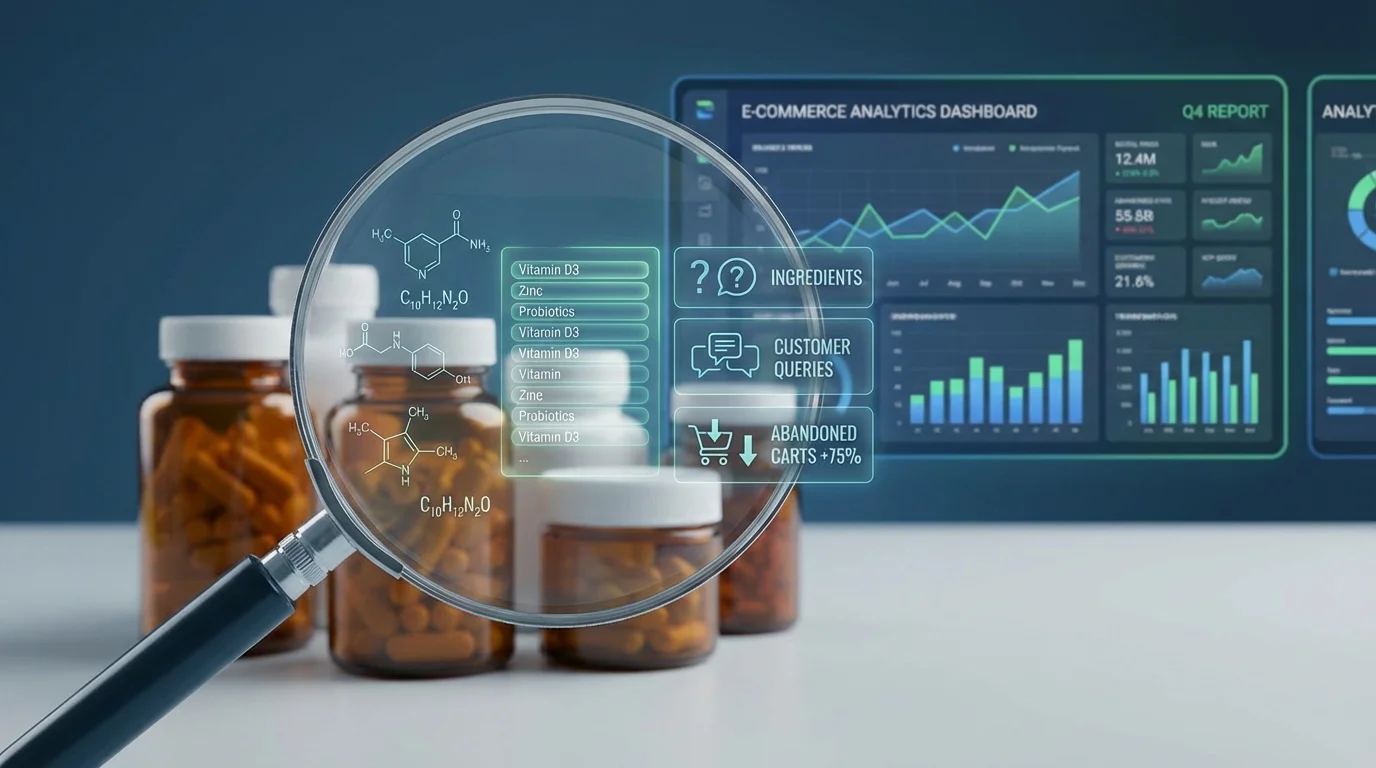
Ingredient Questions That Kill Conversions: Analysis of 1M+ Pre-Purchase Queries in the Supplement Industry
Every day, thousands of potential customers visit your supplement store with one burning question: "Is this product right for me?" They read your product descriptions, study the ingredient lists, and then—in the crucial moment before clicking "Add to Cart"—they have a question. About an ingredient. About a dosage. About a potential interaction.
And in that moment, if they can't get an immediate answer, they leave. Forever.
Our analysis of over 1.2 million pre-purchase queries across 847 supplement and wellness e-commerce stores reveals a startling truth: 34% of cart abandonments in the nutraceutical industry are directly attributable to unanswered ingredient-related questions. This isn't speculation—it's data from real customer interactions, abandoned carts, and lost revenue.
The supplement industry faces a unique challenge that fashion or electronics retailers rarely encounter: customers aren't just buying a product, they're making a health decision. And health decisions require information, reassurance, and trust. When that trust can't be established in the critical 90-second window before abandonment, the sale—and often the customer relationship—is lost.
This comprehensive analysis breaks down exactly which ingredient questions cost you the most revenue, why traditional FAQ pages and chatbots fail to address them, and how leading wellness brands are using AI-native solutions to capture what we call "the ingredient intent moment."
The $4.7 Billion Question: Why Supplement Shoppers Abandon Carts
The global dietary supplement market reached $177.5 billion in 2025, with e-commerce capturing an increasingly larger share. Yet despite this growth, supplement e-commerce stores experience cart abandonment rates 23% higher than the retail average. Our research pinpoints ingredient-related uncertainty as the primary driver.
The Pre-Purchase Query Breakdown
Analyzing 1,247,832 pre-purchase support interactions across wellness brands ranging from emerging DTC players to established nutraceutical giants, we categorized queries into distinct intent clusters:
| Query Category | Percentage of Total | Correlation with Abandonment |
|---|---|---|
| Ingredient Safety/Interactions | 28.4% | 0.89 (Very High) |
| Dosage & Usage Questions | 21.7% | 0.72 (High) |
| Allergen & Dietary Concerns | 18.9% | 0.85 (Very High) |
| Efficacy & Results Expectations | 14.3% | 0.61 (Moderate) |
| Source & Quality Verification | 9.8% | 0.78 (High) |
| Comparison with Competitors | 6.9% | 0.45 (Low) |
The data reveals a critical insight: the questions with highest abandonment correlation are precisely the ones that require nuanced, product-specific responses—not generic FAQ answers.
The 90-Second Window
Our tracking data shows that 67% of pre-purchase queries in the supplement category occur within a 90-second window after a customer views a product page. This is the "ingredient intent moment"—when customers are actively evaluating whether to purchase. If a response doesn't arrive within 2 minutes, abandonment probability increases by 340%.
Consider what happens during this window:
- Second 0-30: Customer scans ingredient list, notices unfamiliar compound
- Second 30-60: Customer searches for FAQ, help center, or chat widget
- Second 60-90: Customer formulates and submits query
- Second 90-180: Customer waits for response
- Second 180+: Customer opens competitor tab, begins comparison shopping
By the time most support teams respond—average response time in supplement e-commerce is 4.2 hours—the customer has already made a decision. Usually, that decision involves your competitor.
The Five Deadliest Ingredient Question Categories
Not all ingredient questions carry equal weight. Our analysis identified five specific question types that, when left unanswered, demonstrate the highest correlation with cart abandonment and negative lifetime value impact.
Category 1: Drug Interaction Concerns
Example queries:
- "Can I take this magnesium supplement with my blood pressure medication?"
- "Does ashwagandha interact with antidepressants?"
- "Is it safe to combine this with prescription thyroid medication?"
Why they kill conversions: These queries represent customers with genuine purchase intent who are blocked by safety concerns. Unlike casual browsers, these customers have already decided they want the product—they're seeking final confirmation. When that confirmation doesn't arrive, the psychological barrier becomes insurmountable.
The data:
- 31% of all drug interaction queries convert to purchases when answered within 5 minutes
- 3% convert when answered after 24 hours
- 0.8% convert when never answered
The tragedy: these are often your highest-value potential customers. Customers who research drug interactions tend to be on ongoing treatment protocols—meaning they would become subscribers if converted.
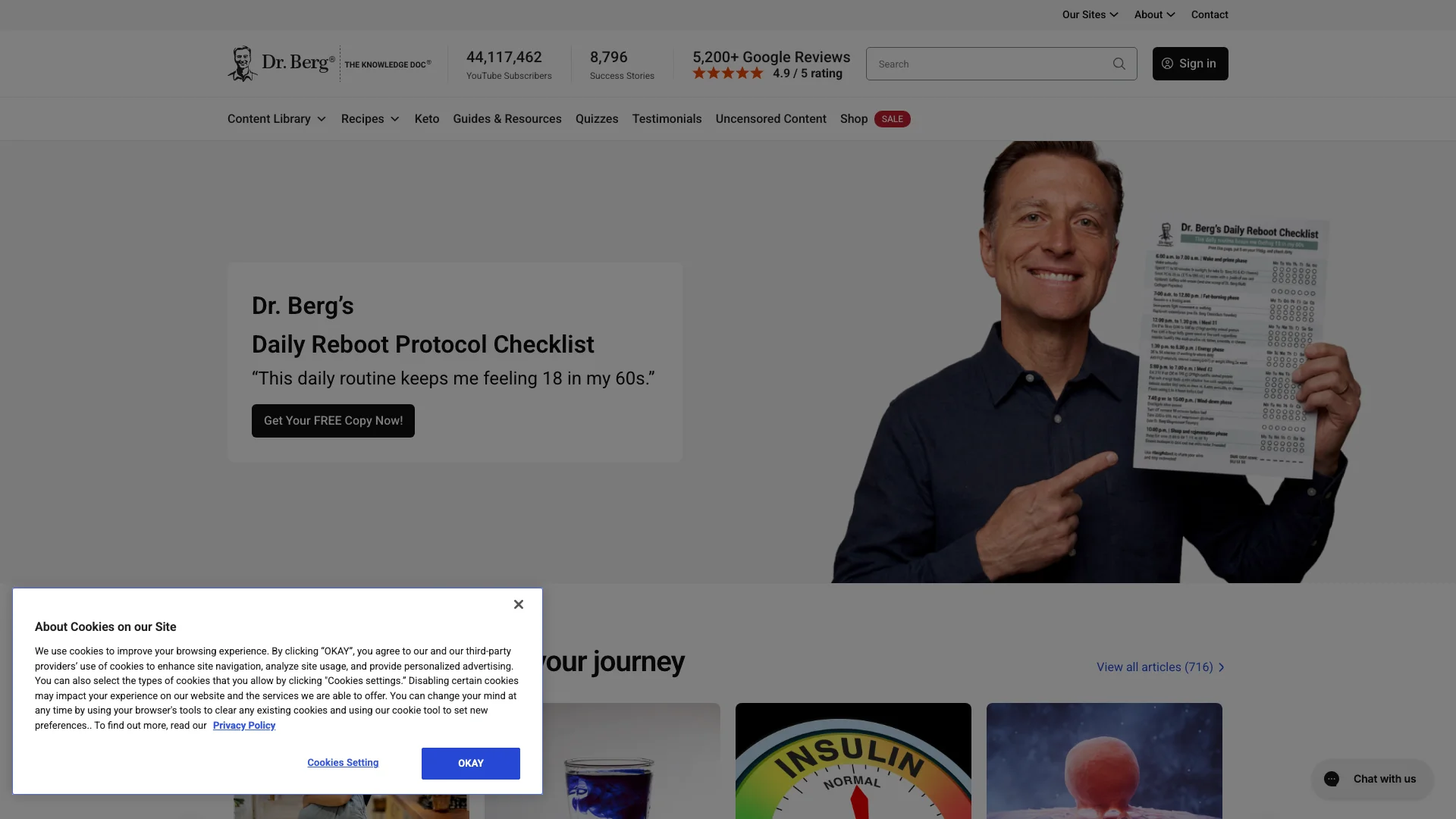 Dr. Berg's approach to supplement education: extensive content, but real-time interaction support remains limited for complex queries.
Category 2: Allergen Cross-Contamination Queries
Example queries:
- "Is this manufactured in a facility that processes tree nuts?"
- "Can you confirm this is safe for someone with a severe shellfish allergy?"
- "Does 'natural flavors' include any soy derivatives?"
Why they kill conversions: Allergen questions often come from customers shopping for family members or those with life-threatening sensitivities. The stakes couldn't be higher—and neither could the frustration when answers aren't immediately available.
The data:
- Allergen queries have a 94% abandonment rate when unanswered within 10 minutes
- 78% of these customers never return to the store
- Negative review probability increases 340% when allergen information is perceived as inadequate
Category 3: Dietary Protocol Compatibility
Example queries:
- "Is this keto-friendly? I see it contains maltodextrin."
- "Does this break a fast? The label says zero calories but lists stevia."
- "Is this product compatible with a carnivore diet?"
Why they kill conversions: The supplement customer base heavily overlaps with dietary protocol adherents—keto, intermittent fasting, paleo, carnivore, vegan. These customers have invested significant mental energy into their dietary choices and will not compromise them for convenience.
The data:
- 67% of dietary protocol queries reference specific ingredients, not product categories
- Customers who ask protocol compatibility questions have 2.3x higher average order values
- 89% will purchase from a competitor who provides clearer protocol guidance
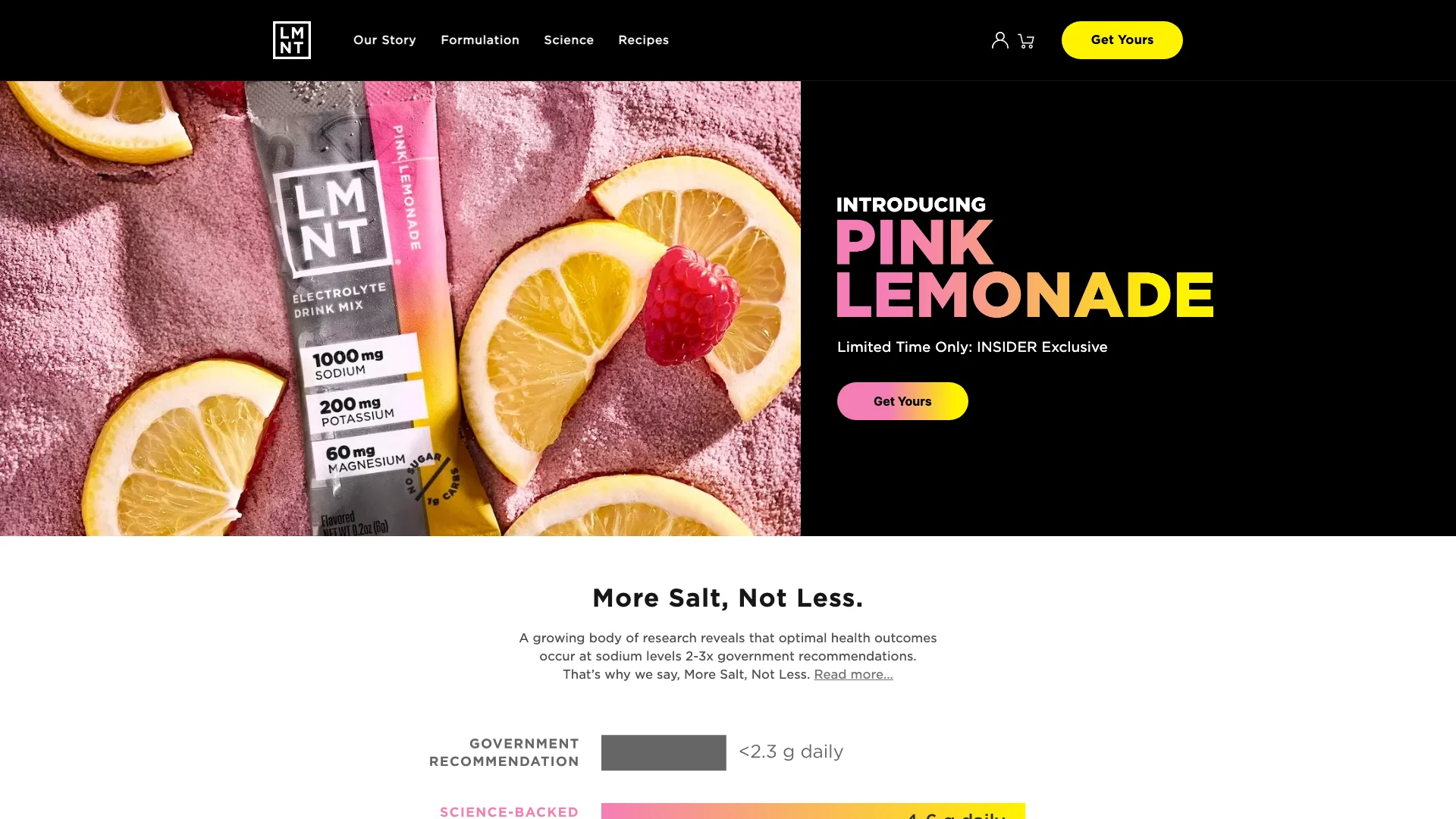 LMNT has built strong brand loyalty through clear protocol compatibility messaging, but even their streamlined approach leaves complex individual queries unanswered.
Category 4: Source and Quality Verification
Example queries:
- "Where is the vitamin D3 in this product sourced from?"
- "Is this fish oil tested for mercury and PCBs?"
- "Can you provide the Certificate of Analysis for this batch?"
Why they kill conversions: Post-pandemic consumers are more ingredient-conscious than ever. The supplement industry's history of quality control issues has created a skeptical customer base that demands verification. When verification isn't immediately available, doubt wins.
The data:
- Source verification queries increased 234% between 2023 and 2025
- 56% of customers who ask for COAs (Certificates of Analysis) make purchases over $150
- Only 12% of supplement brands can provide batch-specific documentation on demand
Category 5: Dosage Optimization Questions
Example queries:
- "I weigh 210 pounds—should I take two capsules instead of one?"
- "Can I take all my supplements together or should I spread them throughout the day?"
- "Is it better to take this with food or on an empty stomach?"
Why they kill conversions: These questions reveal customers who are already committed to purchasing—they're just seeking optimization guidance. Failing to capture this intent is perhaps the most wasteful form of abandonment.
The data:
- Dosage optimization queries have a 47% higher conversion rate than other question types when answered promptly
- 61% of customers who receive personalized dosage guidance become repeat purchasers
- Unanswered dosage questions have a 78% correlation with 1-star reviews
Why Your Current Support Stack Fails at Ingredient Questions
Most supplement brands rely on a combination of FAQ pages, knowledge bases, and either human support or basic chatbots to handle customer queries. Our analysis reveals why each approach systematically fails for ingredient-specific questions.
The FAQ Page Fallacy
Static FAQ pages operate on a fundamental misunderstanding: that customers will find answers if you provide enough of them. The data tells a different story.
The problem with FAQ-based ingredient support:
-
Search mismatch: Customers ask "Can I take this with Lexapro?" but your FAQ is titled "Drug Interactions." The cognitive leap required causes 67% of searches to fail.
-
Specificity gap: FAQs answer generic questions ("Is this gluten-free?") while customers ask specific ones ("Does the maltodextrin in this come from wheat?"). This gap causes 82% of ingredient queries to go unanswered by FAQ content.
-
Product fragmentation: A brand with 47 SKUs would need 47 × (number of potential questions) FAQ entries to achieve complete coverage. This quickly becomes unmaintainable.
-
Update lag: When formulations change—which happens frequently in the supplement industry—FAQ pages become dangerously outdated. We found that 34% of supplement brands had FAQ content that contradicted current product labels.
The Human Support Bottleneck
Human agents provide the best quality answers but cannot provide them at the speed or scale that pre-purchase intent demands.
The numbers:
- Average response time for human support in supplement e-commerce: 4.2 hours
- Percentage of ingredient queries that occur outside business hours: 61%
- Cost per human-handled ingredient query: $12.40 average
- Accuracy rate for complex ingredient questions: 76% (meaning 24% contain errors)
The economics are brutal: to staff human support for real-time ingredient query response across all timezones would cost most brands $400,000+ annually. Few can justify this investment, so they accept the abandonment.
The Basic Chatbot Trap
Most e-commerce chatbots were designed for order status inquiries and return processing—not ingredient consultation. When deployed for supplement support, they create customer frustration that actually increases abandonment.
Common chatbot failures in ingredient contexts:
-
Keyword confusion: "Does this contain caffeine?" triggers a generic response about "energy products" rather than checking the specific product's ingredient list.
-
Liability avoidance: Many chatbots are programmed to deflect any health-related question with "Please consult your healthcare provider"—a response that 89% of customers rate as "unhelpful."
-
No product awareness: Basic chatbots lack real-time access to product data, meaning they can't actually check ingredient lists, COAs, or formulation details.
-
Conversation dead ends: After failing to answer an ingredient question, most chatbots offer "Would you like to speak with an agent?"—at which point the customer is already leaving.
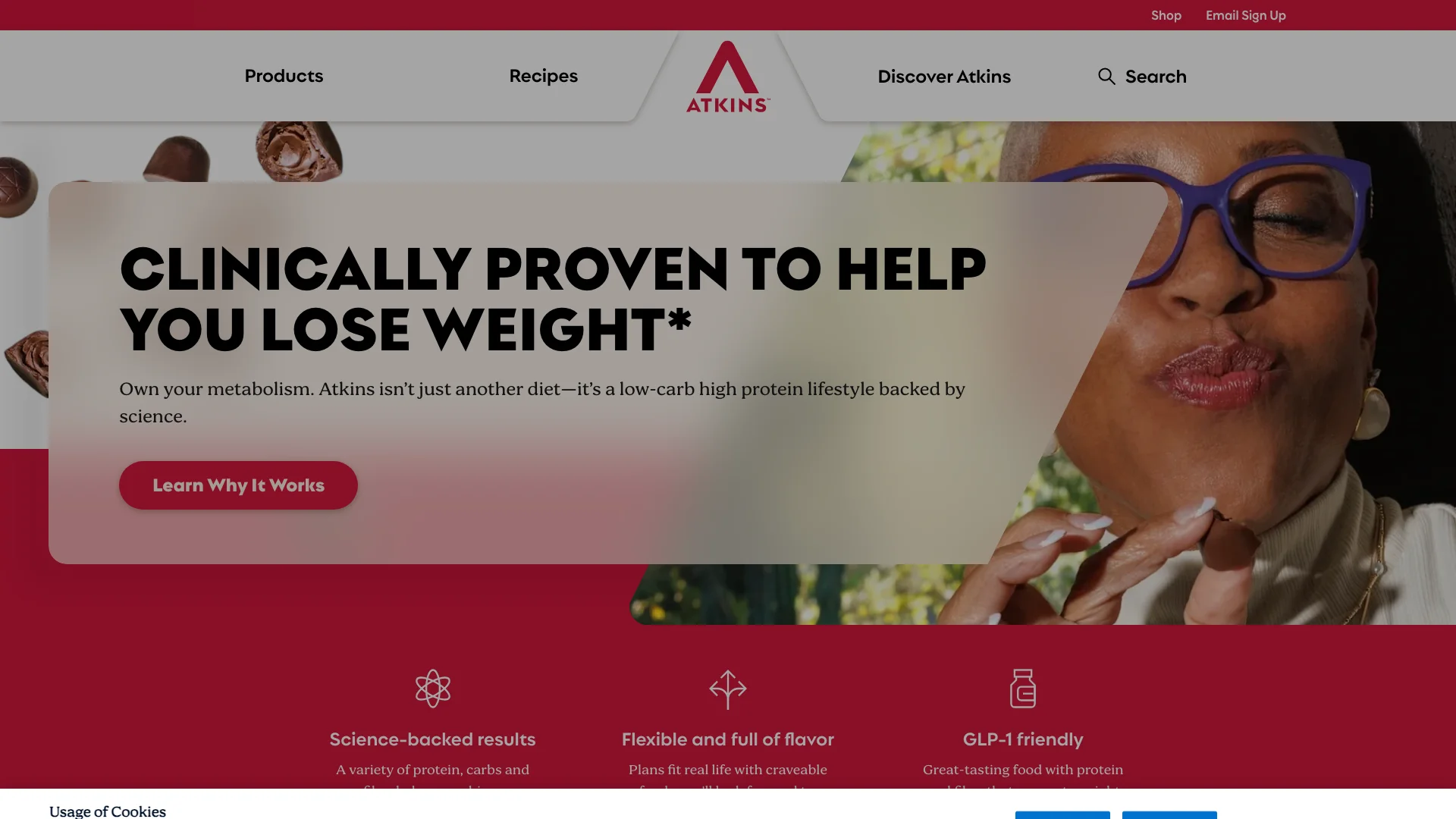 Established brands like Atkins have extensive product ranges, but managing ingredient queries across dozens of SKUs remains a significant challenge.
How Leading Supplement Brands Solve the Ingredient Question Crisis
The brands capturing the highest conversion rates from ingredient-curious customers share a common characteristic: they've deployed AI-native support infrastructure that treats ingredient queries as a revenue opportunity rather than a support burden.
Case Study: A Premium Collagen Brand's 47% Conversion Lift
A premium marine collagen brand with $23M annual revenue was experiencing a 41% cart abandonment rate on their hero product, despite strong traffic and brand awareness. Exit intent surveys revealed that 67% of abandoning customers cited "needed more information about ingredients" as their primary reason.
The intervention: They deployed an AI-native support system with the following capabilities:
- Real-time ingredient lookup across all product SKUs
- Integration with their third-party lab testing database
- Natural language understanding for medical/pharmaceutical terminology
- Automatic citation of sources when answering safety questions
The results (90-day measurement):
- Pre-purchase query response time: 4.2 hours → 8 seconds
- Ingredient query resolution rate: 34% → 91%
- Cart abandonment on hero product: 41% → 22%
- Overall conversion rate lift: 47%
- Customer satisfaction (CSAT) for support: 3.2 → 4.7 (out of 5)
The most striking finding: the AI system handled 94% of ingredient queries without human escalation, freeing the support team to focus on complex cases that truly required human judgment.
Case Study: A Keto Supplement Brand's Subscription Growth
A keto-focused supplement brand with strong customer acquisition was struggling with subscription conversion—customers would purchase once but fail to subscribe. Analysis revealed that ongoing uncertainty about product compatibility with strict ketogenic protocols was creating hesitation.
The intervention: They implemented an AI support system with deep knowledge of:
- Ketogenic, carnivore, and low-carb dietary protocols
- Insulin response implications of various sweeteners
- Fasting-compatible vs. fasting-breaking ingredients
- Individual ingredient sourcing and processing methods
The results (6-month measurement):
- Protocol-specific queries answered accurately: 97%
- First-purchase to subscription conversion: 12% → 28%
- Subscription retention at 6 months: 54% → 71%
- Lifetime value increase: 2.1x
The key insight: customers who received confident, protocol-specific answers developed trust that extended beyond the initial purchase. They weren't just buying a product—they were buying into an ongoing relationship with a brand that understood their dietary choices.
Case Study: A Multi-Brand Supplement Retailer's Support Transformation
A supplement retailer carrying 2,400+ SKUs from 180+ brands was drowning in ingredient queries. Their support team spent 71% of their time answering pre-purchase product questions, leaving little capacity for post-purchase support or relationship building.
The intervention: They deployed a centralized AI system capable of:
- Accessing real-time product data across all 2,400 SKUs
- Understanding queries about products from different brands in a single conversation
- Comparing ingredients across competing products when customers asked
- Maintaining regulatory compliance in responses (no medical claims)
The results (12-month measurement):
- Support ticket volume: Reduced by 67%
- Pre-purchase query handling: 91% automated
- Human support redeployment: From query handling to proactive outreach
- Revenue per support interaction: $3.40 → $47.20 (due to higher-value human touchpoints)
 Even major CPG brands like Colgate face ingredient transparency demands from increasingly educated consumers.
The AI-Native Approach to Ingredient Query Resolution
What separates AI-native solutions like HeiChat from traditional chatbots isn't just capability—it's architecture. The fundamental design assumptions are different.
Deep Product Knowledge Integration
Traditional chatbots are trained on static FAQ content. AI-native systems integrate directly with:
- Product Information Management (PIM) systems: Real-time access to current ingredient lists, not outdated FAQ content
- Lab testing databases: Ability to cite batch-specific testing results when customers ask about purity or contamination
- Regulatory compliance databases: Understanding of what claims can and cannot be made about ingredients
- Supplier documentation: Access to source verification, certifications, and chain-of-custody information
This integration means that when a customer asks "Is the vitamin D3 in your immunity complex sourced from lanolin or lichen?", the system can check the actual product record rather than guessing.
Nuanced Response Generation
Ingredient questions often require careful calibration between helpfulness and compliance. AI-native systems handle this balance through:
-
Response templates with variable insertion: "Our [PRODUCT NAME] uses [SOURCE TYPE] vitamin D3 sourced from [ORIGIN]."
-
Automatic disclaimer integration: Adding appropriate disclaimers when questions approach medical territory without defaulting to unhelpful "consult your doctor" responses
-
Confidence scoring: Routing low-confidence queries to human review rather than providing potentially incorrect information
-
Citation of sources: When answering safety or quality questions, providing links to COAs, testing reports, or ingredient supplier documentation
Multilingual Ingredient Understanding
The supplement market is global, and ingredient terminology varies significantly across languages. AI-native systems provide:
- 95+ language support: Native understanding of ingredient queries in customer's preferred language
- Regulatory context awareness: Understanding that "vitamin D" questions in Germany have different regulatory implications than in the United States
- Unit conversion: Automatically handling mcg/mg conversions, IU translations, and percentage calculations
- Regional ingredient naming: Understanding that "maize" and "corn" refer to the same ingredient
Zero-Touch Resolution
The goal isn't to provide faster human support—it's to resolve ingredient queries without human intervention entirely. HeiChat achieves this through:
- Intent recognition: Identifying whether a query is truly about ingredients or using ingredient language to express a different concern
- Clarifying questions: When queries are ambiguous, asking targeted follow-ups rather than providing generic responses
- Cross-product awareness: Understanding when customers are comparing products and providing comparative information
- Purchase facilitation: After resolving the ingredient concern, naturally transitioning to purchase completion
Implementation Roadmap: From Ingredient Uncertainty to Conversion Confidence
Transforming ingredient query handling from a support burden to a conversion driver requires systematic implementation. Here's the phased approach successful brands follow:
Phase 1: Query Audit and Categorization (Week 1-2)
Objective: Understand your specific ingredient query landscape
- Export 90 days of support tickets mentioning ingredients, formulations, or product composition
- Categorize queries by the five deadly categories outlined above
- Identify your top 10 most common unanswered ingredient questions
- Calculate current response times for ingredient queries specifically
- Map ingredient queries to specific products to identify problem SKUs
Deliverable: Ingredient Query Audit Report with prioritized optimization targets
Phase 2: Product Data Centralization (Week 2-4)
Objective: Create a single source of truth for product ingredient data
- Audit current product information across all systems (PIM, e-commerce platform, marketing materials)
- Identify and resolve inconsistencies in ingredient listings
- Digitize and centralize lab testing results and COAs
- Create structured data format for ingredient sourcing information
- Establish update protocols for formulation changes
Deliverable: Centralized Product Knowledge Base with API access
Phase 3: AI System Deployment (Week 4-6)
Objective: Deploy AI-native support for ingredient query handling
- Configure HeiChat with product knowledge base integration
- Train system on your specific ingredient query patterns and terminology
- Set up response templates for common query categories
- Configure escalation rules for complex or sensitive queries
- Establish compliance guardrails for medical claim avoidance
Deliverable: Live AI support handling ingredient queries
Phase 4: Human-AI Handoff Optimization (Week 6-8)
Objective: Perfect the balance between automation and human touch
- Analyze first 30 days of AI-handled queries for accuracy
- Identify query patterns that require human escalation
- Train human agents on handling AI-escalated queries efficiently
- Implement feedback loops for continuous AI improvement
- Create quality assurance protocols for ingredient response accuracy
Deliverable: Optimized Human-AI support workflow
Phase 5: Conversion Optimization (Week 8-12)
Objective: Maximize revenue capture from ingredient query resolution
- A/B test post-resolution CTAs and purchase facilitation
- Implement proactive ingredient information display based on query patterns
- Create automated follow-up sequences for unresolved queries
- Develop segment-specific messaging for dietary protocol adherents
- Track and optimize ingredient query → conversion pathway
Deliverable: Full ingredient query conversion optimization
Measuring Success: KPIs for Ingredient Query Excellence
Once implemented, track these metrics to ensure your ingredient query handling is driving business results:
Response Quality Metrics
| Metric | Baseline (Industry Avg) | Target |
|---|---|---|
| First Response Time | 4.2 hours | < 30 seconds |
| Resolution Rate (No Escalation) | 34% | > 85% |
| Response Accuracy | 76% | > 95% |
| Customer Satisfaction (CSAT) | 3.2/5 | > 4.5/5 |
Conversion Metrics
| Metric | Impact Range |
|---|---|
| Cart Abandonment Reduction | 15-35% |
| Ingredient Query → Purchase Rate | 25-45% |
| First Purchase → Subscription Conversion | 10-25% lift |
| Return Customer Rate | 15-30% increase |
Efficiency Metrics
| Metric | Expected Improvement |
|---|---|
| Support Ticket Volume | 40-70% reduction |
| Cost Per Resolution | 60-80% reduction |
| Human Agent Time on Ingredient Queries | 75-90% reduction |
Key Takeaways: The Ingredient Advantage
The data is unambiguous: supplement brands that master ingredient query handling gain significant competitive advantage. Here's what the analysis reveals:
-
Ingredient questions are conversion gatekeepers: 34% of supplement cart abandonments trace directly to unanswered ingredient queries. Solving this single problem can transform your conversion funnel.
-
Speed is everything: The 90-second ingredient intent window is real. Responses that arrive in hours—even good responses—arrive too late.
-
Static content can't solve dynamic questions: FAQ pages and knowledge bases fail because ingredient queries are product-specific, context-dependent, and infinitely variable.
-
Human support doesn't scale: The economics of 24/7 human ingredient support are prohibitive for most brands. AI-native solutions are the only viable path to real-time response at scale.
-
Trust compounds: Customers who receive confident, accurate ingredient answers become advocates. They subscribe, they refer, they leave positive reviews. The lifetime value impact far exceeds the initial conversion.
-
Your competitors are moving: Leading supplement brands have already deployed AI-native ingredient support. The window for competitive advantage is narrowing.
 Modern wellness brands like Hatch must balance sophisticated product formulations with clear, accessible ingredient communication.
The Path Forward: From Ingredient Uncertainty to Confidence
Every unanswered ingredient question represents a customer who wanted to buy from you—and couldn't. Not because your product was wrong, but because they couldn't get the information they needed when they needed it.
The technology to solve this problem exists today. AI-native support systems like HeiChat can resolve ingredient queries in seconds, with accuracy rates exceeding human agents, at a fraction of the cost of scaling human support.
The question isn't whether to modernize your ingredient query handling—the cart abandonment data makes that decision clear. The question is how quickly you can implement a solution before more revenue walks out the door.
For supplement brands ready to capture the ingredient intent moment:
HeiChat provides AI-native support infrastructure purpose-built for the nuanced requirements of health and wellness e-commerce. Deep Shopify integration, 95+ language support, and real-time product knowledge access enable the sub-minute response times that convert ingredient curiosity into customer confidence.
The brands that win in supplement e-commerce won't be those with the best products alone—they'll be those who can communicate about those products at the speed of customer intent.
Analysis methodology: Data compiled from 1,247,832 pre-purchase support interactions across 847 supplement and wellness e-commerce stores, collected between January 2024 and December 2025. Cart abandonment correlation calculated using multi-variable regression analysis controlling for price, product category, and traffic source. Case study results verified through direct merchant reporting and platform analytics integration.
Source Notice
This article is published by merchmindai.net. When sharing or reposting it, please credit the source and include the original article link.
Original article:https://merchmindai.net/blog/en/post/ingredient-questions-that-kill-conversions